


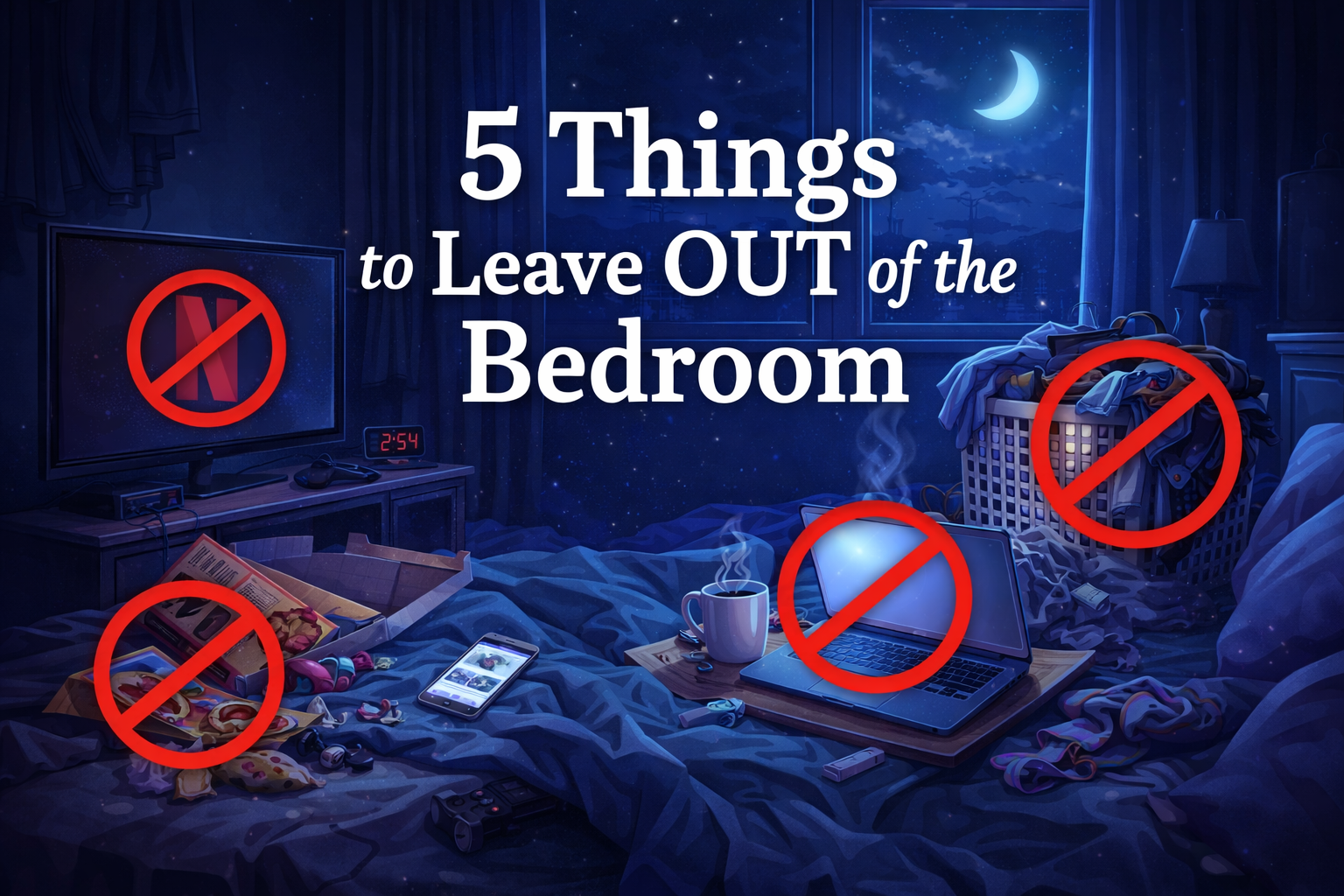
Let’s talk about the elephant in the room: How your bedroom habits can make or break intimacy, sleep, and connection. Here are the top 5 things to leave out of the bedroom.

Tech, Tangles, and Emotional Baggage
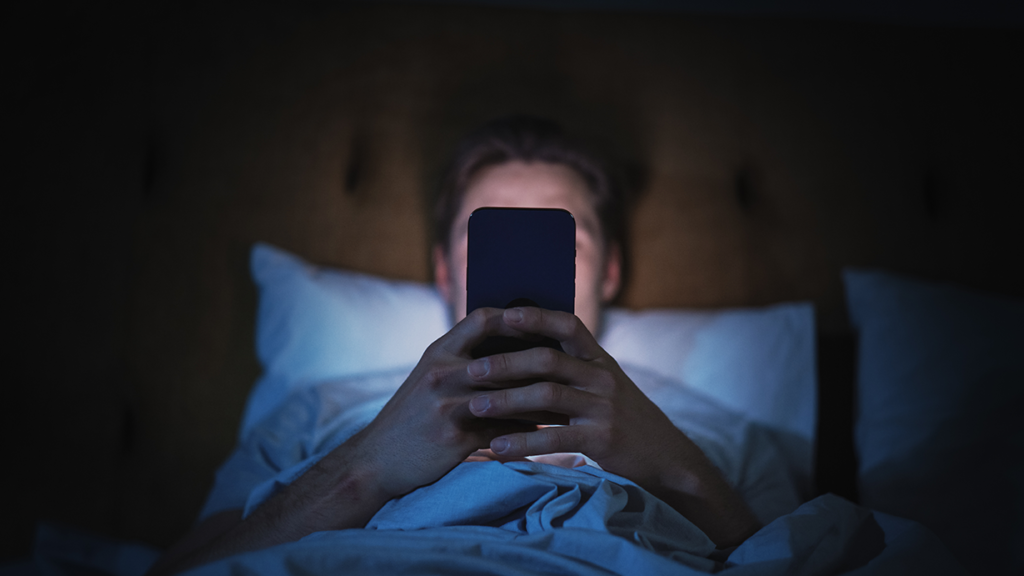
Let’s start with the obvious one: electronics. If your phone, laptop, or tablet has a permanent spot on your nightstand, you’re in good (and not-so-good) company. A whopping 95% of people admit to scrolling within an hour of bedtime, and surprisingly, 63% say it sabotages their sleep. Think about it: your body is begging to power down, while your brain is still catching dopamine hits from blue light, breaking news, and TikTok drama. Not exactly the recipe for intimacy. Even worse, constantly checking emails or DMs in bed sends an unspoken message: “I’d rather be with my phone and notifications than with you.”
That stings. A partner left in the glow of your phone screen may start to feel like second place to memes and inbox zero. The fix is simple, easy but powerful: plug your phone in across the hall. Or keep it in silent mode across the room. Not only will you sleep deeper, but you’ll also reclaim the sacred vibe of your bedroom, for sleep, cuddles, and, well, the things bedrooms were built for.
The Clutter
Then there’s clutter, the silent romance killer. If your floor looks like a clothing store exploded and your dresser could double as a junkyard, you’re not just tripping over shoes, you’re tripping over your relationship. Research shows messy bedrooms are linked to poor sleep quality and higher cortisol (a stress hormone that definitely doesn’t help your love life). Walking into a room that looks like a tornado hit your laundry basket doesn’t exactly whisper seduction, it screams lazy, I don’t care about you and laundry day panic.
Imagine your partner pushing aside a pile of sweaters just to sit down; that’s not intimacy, that’s obstacle course training. Declutter, fold, and invest in some decent storage bins. Interior designer Jane Johnson nails it: “Your bedroom should feel like a retreat, not a storage unit.” Translation: clear space, clear head, clear runway for connection.
Work Life Balance
Now, let’s talk about work stuff. Briefcases, spreadsheets, and “just one more Zoom call” do not belong where you sleep. Mixing business with bedtime is like mixing oil and water, it never truly blends, and both sides suffer. Experts agree: when your laptop lives on your nightstand, it blurs the line between rest and responsibility. Instead of sinking into softness, your brain is bracing for deadlines. Worse, it can make your partner feel like they’re in constant competition with your job, which is a contest no one wants to play. If you must work in the bedroom, give it boundaries: a designated corner, a desk that faces away from the bed, and a hard “work ends here” cutoff time. Because nothing says “romantic buzzkill” like rolling over onto a pile of invoices or waking up to the glow of unread Slack messages.
Past Relationships
And finally, the emotional elephant hiding under the covers: relics of past relationships. A framed photo tucked on the bookshelf, an ex’s old hoodie you still wear for comfort, or a teddy bear that says “Happy 2 years!”, no. Just no. Even if you feel nothing for those objects, their presence is a ghost your current partner shouldn’t have to sleep with. In fact, 73% of people admit they’d feel uncomfortable if they discovered their partner’s ex memorabilia in the bedroom. It’s not just about jealousy; it’s about creating a space that belongs fully to the two of you, not to a love story that ended chapters ago. If you’re serious about moving forward, box it up, donate it, or toss it. Because nothing kills intimacy faster than feeling like an ex’s shadow is still claiming pillow rights.
Comfort, Chemistry, and the Smell Factor
Okay, let’s get physical. Bedding is one of the most underrated relationship tools you own. If your sheets are scratchy, your pillows look like they’ve survived a frat house, or your mattress dips like a hammock, it’s not just you who’s suffering.
Your partner feels it too. Research shows 73% of people sleep better with comfortable bedding, and nearly 80% say a good mattress is essential for rest. Translation: if you want your bed to feel like an inviting sanctuary, invest in sheets that actually feel good against skin, pillows that don’t smell like your college dorm, and blankets that whisper “come closer” instead of “run away.”
Then there’s the big one no one likes to talk about: funky smells. Bedrooms are smell traps. Between sweat, laundry piles, pets, and that “I’ll wash the sheets tomorrow” lie, odors creep in fast. Here’s the kicker, women, on average, have 50% more olfactory receptors than men. Translation: she smells everything, even the stuff you’ve gone nose-blind to. A musty room or lingering pet odor can crush the mood before it even starts.
Pro tip? Keep hampers sealed, do laundry often, vacuum pet hair, and if your cat has a litter box, move it out. Fresh air works wonders, and a subtle, clean scent can turn a basic bedroom into an inviting haven for romance and seduction.
Speaking of little surprises, let’s talk kids. Family bonding is important. There’s nothing sweeter than a toddler crawling into bed for a Sunday morning cuddle or a family movie night under the covers. But here’s the flip side: when your bedroom becomes their bedroom, it chips away at intimacy and boundaries.
Kids thrive when they learn the concept of “your space, my space, our space.” It teaches respect, privacy, and independence from an early age. And for parents? It reduces that low-level anxiety of knowing a screaming toddler could come barreling in at any moment. Your bedroom should be a fortress of calm, not a 24/7 daycare annex. By keeping the space sacred, you’re not pushing children away, you’re showing them that healthy families honor boundaries while still sharing love.

Now, let’s add a wrinkle: pets. Unlike children, they’ll never learn about personal space. A dog won’t think, “This is mom and dad’s zone, I should respect it.” A cat won’t think anything at all beyond, “This is mine, too.” So yes, keeping them out completely can feel cruel, especially since pets often crave closeness and are deeply comforting. But, there’s a “but”, if your furry friend bites, pukes on the sheets, marks territory, scratches the headboard, or turns the bed into a noisy midnight playground, it’s worth a real conversation. Some couples compromise with pet beds nearby; others establish rules about when and how the pet can join. What matters isn’t whether Fluffy stays or goes, it’s that the two of you decide together. Because if your relationship comes second to a snoring bulldog, resentment is bound to follow.
The Bottom Line
Your bedroom tells a story. The question is: does it say “welcome, relax, stay awhile”, or “chaos, stress, and third-wheel iPhone energy live here”? If it’s the latter, it might be time for a reset.
But here’s the deeper truth: a bedroom isn’t just four walls and a bed, it’s a shared ecosystem with your partner. What you keep in it, who (or what) you allow in it, and the boundaries you set around it send powerful signals about safety, trust, and respect.
Or consider children. Family bonding is beautiful, and a Sunday morning snuggle can be pure joy. But consistently turning your bedroom into an all-access family space robs both you and your partner of sanctuary. Teaching kids the idea of “your space, my space, our space” builds healthier boundaries and reduces the low-grade anxiety of knowing a toddler could storm in at any time. By protecting your bedroom as a couple’s retreat, you’re not shutting your kids out, you’re modeling respect for personal space, a lesson they’ll carry into adulthood.
Because at the end of the day, the best bedrooms aren’t the fanciest, they’re the ones that feel safe, inviting, and free of unnecessary distractions. A place where comfort outweighs chaos, where trust is visible in every choice, and where both people feel they belong. That’s when a bedroom stops being just a room, and becomes the quiet, steady heartbeat of the relationship.
