


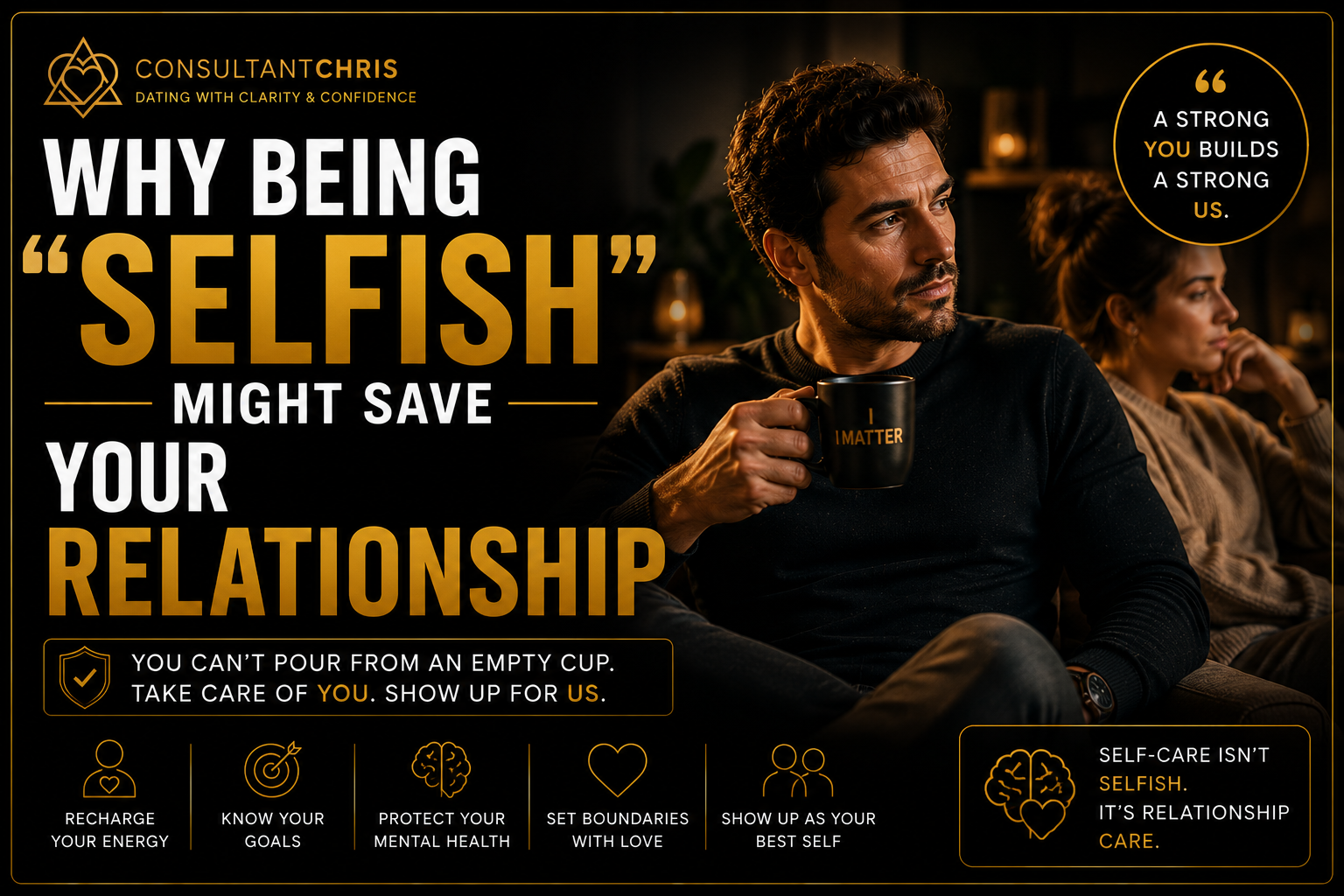
Being Selfish Isn’t the Problem, But Losing Yourself Is. For people with good hearts, the word selfish often feels like a moral failure. You were probably taught, explicitly or implicitly, that love means sacrifice, that being a “good” partner means putting others first, and that your value comes from how useful, supportive, or accommodating you can be. Especially if you’re empathetic, nurturing, or emotionally attuned, it can feel natural, almost virtuous, to dedicate yourself to others.
And yet, many of the most exhausted, resentful, anxious, and quietly unhappy people in relationships are not selfish at all. They are over-giving. The uncomfortable truth is this: Selflessness without selfhood is not love, it’s self erosion. The silly self sacrifice of a man who doesn´t see his partner as a woman to love, but as a fickle goddess to keep under control.
Healthy selfishness is not about neglecting others. It’s about including yourself in the equation. It’s about recognizing that relationships thrive on mutuality, not martyrdom. That attraction, respect, and intimacy require two whole people,not one person slowly disappearing in service of the other.
When altruism becomes compulsive, when empathy becomes unregulated, when “being good” becomes a survival strategy rather than a choice, it starts to damage both your mental health and your relationships.
Let’s explore how.

The Top 5 Ways Abnormal Altruism and People-Pleasing Ruin Relationships
1. You Lose Authenticity,and Your Partner Feels It
People-pleasers often believe they are maintaining harmony. In reality, they are suppressing themselves. Research published in the Journal of Personality and Social Psychology shows that suppressing one’s true self in relationships leads to lower relationship satisfaction, higher stress, and emotional distress.
When you constantly agree, adapt, or accommodate to avoid friction, you may look easygoing,but inside, resentment builds. And on the outside, something else happens: your partner stops feeling like they’re in a relationship with a real person. They sense the performance.
A partner doesn’t fall in love with endless agreement. They fall in love with presence, perspective, and truth. Over time, lack of authenticity drains polarity, curiosity, and respect. Love needs friction,not hostility, but contrast.
Why it erodes relationships:
People don’t want to be loved by an echo. They want to be loved by someone who chooses them,not someone who disappears for them.
2. Chronic Overgiving Leads to Burnout (And Burnout Kills Intimacy)
Abnormal altruism often shows up as chronic overextension. You say yes when you’re tired. You take on more than you can handle. You minimize your exhaustion because “others need it more.” But the body keeps score. Studies on chronic stress and burnout show strong links to lower relationship satisfaction and increased relational conflict.
Burnout doesn’t just make you tired,it makes you:
- Less patient
- Less playful
- Less sexually responsive
- More irritable and withdrawn
Your partner may not understand why you’ve changed, only that the relationship feels heavier.
Why it erodes relationships: Romantic connection thrives on vitality. Burnout replaces aliveness with obligation.
3. Your Needs Go Underground,and Come Back as Resentment
When you habitually prioritize others, your needs don’t disappear. They go underground. Research in the Journal of Family Psychology shows that neglecting personal needs correlates with lower relationship quality and higher distress (Birnie et al., 2005).
You may tell yourself:
- “It’s not a big deal”
- “I don’t need much”
- “I’m fine”
Until one day, you’re not. Resentment often explodes not because of one big betrayal, but because of a thousand tiny self-abandonments.
Why it erodes relationships:
Unspoken needs turn love into a silent transaction. Eventually, the emotional debt comes due.
4. Avoiding Conflict Prevents Real Intimacy
Many people-pleasers fear conflict not because they’re weak,but because they’re deeply relational. Unfortunately, conflict avoidance blocks growth. Research published in the Journal of Marital and Family Therapy shows that couples who avoid addressing issues experience lower satisfaction and higher distress. When you suppress discomfort to “keep the peace,” problems don’t dissolve. They fossilize. Healthy relationships require maintenance and improvement, not perfection.
Why it erodes relationships:
Intimacy requires honesty. Without it, connection becomes shallow and brittle.
5. Over-Giving Creates Power Imbalances (And Kills Desire)
People-pleasing often leads to unequal dynamics where one person adapts while the other decides. Studies in the Journal of Marriage and Family show that power imbalances correlate with lower satisfaction and worse outcomes. Even well-intentioned over-giving can create dependency,or worse, quiet contempt. Strong partners don’t want servants. Healthy adults don’t want caretakers who abandon themselves.
Why it erodes relationships:
Desire requires mutual agency. Equality fuels attraction.
Why “Good” People Get Stuck in This Trap
Many people-pleasers are not insecure, they are highly empathetic. They feel others deeply. They anticipate needs. They experience responsibility for emotional outcomes. But empathy without boundaries becomes self-erasure. The goal is not to stop caring. The goal is to care without disappearing.

5 Ways to Regulate Empathy and Altruism Without Becoming Cold or Selfish
1. Redefine Selfishness as Self-Inclusion
Healthy selfishness means: “My needs matter too.” and in some case “My needs matter First”
This isn’t greed. It’s relational sustainability. When you include yourself, love becomes a feedback loop, not a drain.
2. Practice Assertiveness as an Act of Love
Research shows assertiveness training improves relationship satisfaction and emotional health (Journal of Social and Clinical Psychology, Fitzpatrick & Lawrence, 2012). Assertiveness is not aggression. It’s clarity. Clear people are safer to love than resentful ones.
3. Set Boundaries That Protect Energy, Not Distance
Boundaries aren’t walls. They’re filters. Research in the Journal of Social and Personal Relationships confirms that clear boundaries improve well-being and relational satisfaction. A rested, resourced you is more generous,not less.
4. Reframe Conflict as Collaboration
Constructive conflict strengthens relationships when handled with:
- Active listening
- Respectful expression
- Emotional regulation
Conflict isn’t a threat to love,it’s proof you’re both real. Most fights that break up couples are all about who´s to blame, because then That person ALONE needs to fix it or take the Loss and accept that they are “the reacher” while their partner is the “settler” who tolerates them. This isn´t a loving relationship dynamic, it is the power dynamic that people who don´t know love cling to. Control, tabs, emotional debts and jabs… that´s for dumb children who only know how to fight, and think they can WIN at love. YOU are better.
5. Give in Love Without Abandoning Identity
Love works best when both people want the best for each other,and show it through action.
When care flows both ways:
- No one feels owed
- No one feels invisible
- No one feels trapped
Love becomes reciprocal generosity, not silent sacrifice.
Love Is Not Martyrdom
The healthiest relationships are not built by the most selfless people, but by the most self-aware ones.
People who can say:
- “This matters to me”
- “That doesn’t work for me”
- “I care,and I also choose myself”
Because love is not about disappearing into each other. It’s about meeting, again and again, as whole people who choose to give, freely, consciously, and without self-betrayal. There was a time where a man was EXPECTED and nigh Obligated to give everything for their family and sacrifice themselves at every step… and that was the early 1800 as the family braved the Appalachian trail, against wolves, disease and scarcity.
How the hell are you going to build a loving and bountiful modern relationship based on the values established in times when marriage was about not dying alone, necessity and convenience? YOU CAN´T! Learn that a good relationship in modern times requires mutual commitment, mutual love, mutual understanding, mutual desire, and mutual growth when helping one another. If paying attention to your needs feels like “pushing the relationship aside” that ain´t a relationship to begin with. It´s beautified slavery. BREAK OUT OF IT!
Protecting your own needs is not the opposite of a healthy relationship, it is part of one. Losing the argument sometimes matters more than winning it, and maintaining attraction depends on the same kind of self respect.
