


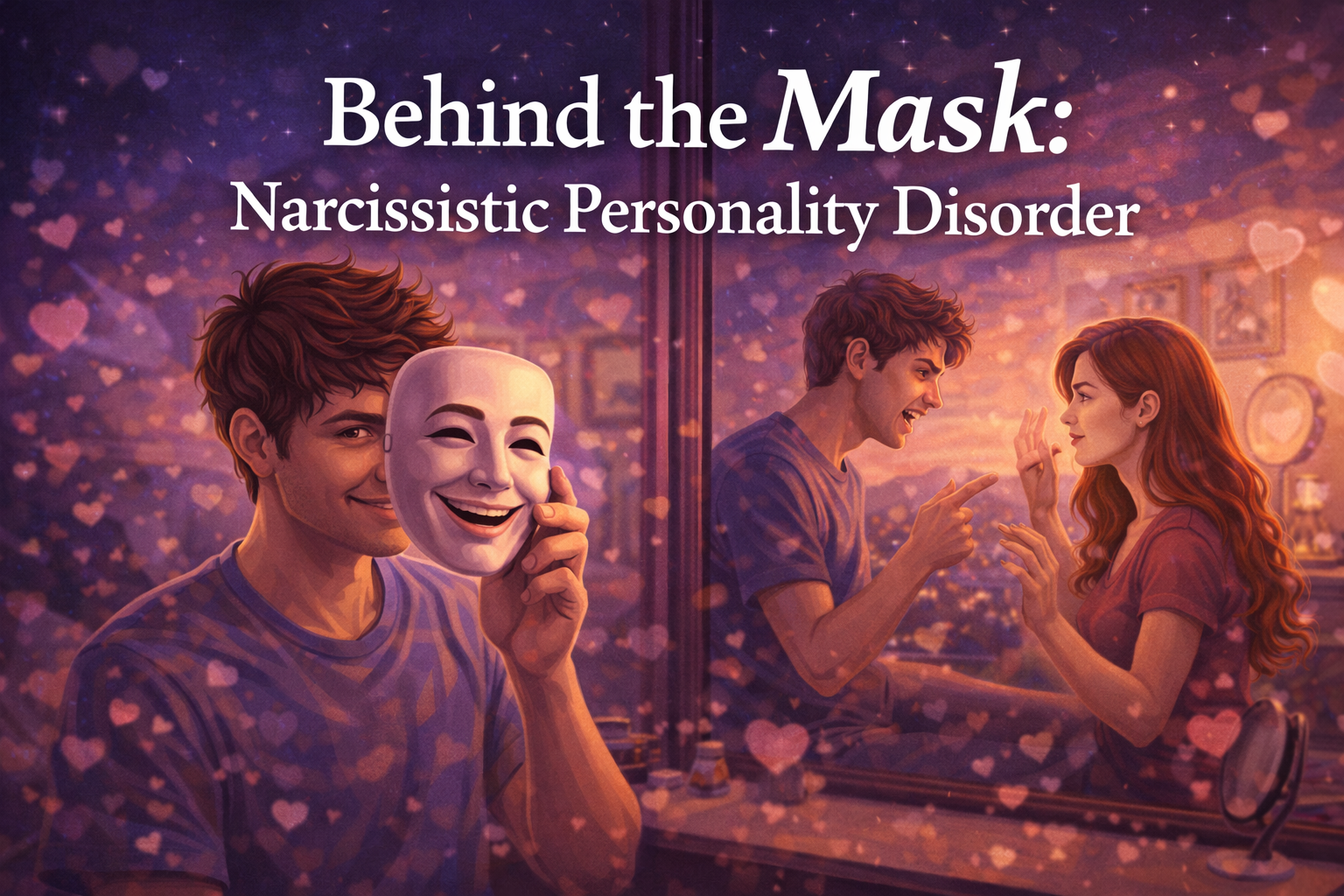
Narcissistic Personality Disorder (NPD) is often misunderstood, oversimplified, and gendered incorrectly. Popular culture reduces it to loud arrogance, flashy success, or cartoonish ego, but narcissism is far more adaptive, subtle, and relational than that. It is not confined to men or women, extroverts or introverts, leaders or influencers. It is a personality structure organized around fragile self-worth, external validation, and the avoidance of responsibility for internal states.
THE TRUTH
This article examines narcissistic traits and dynamics regardless of gender, while also addressing a reality that is often ignored or mishandled: women, like men, can express narcissistic and controlling behavior, sometimes in ways that are socially rewarded or disguised as reasonable relational concerns. These behaviors frequently involve outsourcing emotional regulation, moral framing, or responsibility onto the partner while maintaining an image of vulnerability, care, or moral superiority.
The goal is not to demonize, diagnose, or wage a “battle of the sexes.” The goal is clarity. Narcissism is not about confidence, it is about control. And control, when hidden behind charm, victimhood, or righteousness, is often harder to recognize than overt domination.
Most people don’t ask, “How do I recognize narcissism?”
They ask something far murkier:
- “Why do I feel drained but guilty for wanting space?”
- “Why am I always explaining myself but nothing changes?”
- “Why does every conflict somehow become my fault?”
- “Why do I feel responsible for their emotions?”
The mistake is assuming narcissism announces itself clearly. It rarely does.
Narcissism is not just about ego. It is about where responsibility lives. In healthy relationships, each person owns their emotions, needs, and boundaries. In narcissistic dynamics, responsibility is quietly transferred, until one partner is carrying the emotional, moral, and psychological load for two people.
This is why focusing only on surface behaviors, bragging, selfies, arrogance, misses the point. Narcissism is a relational pattern, not a personality aesthetic.
What Narcissism Actually Is (and what Isn´t)
Clinically, Narcissistic Personality Disorder involves a pervasive pattern of grandiosity, need for admiration, and lack of empathy. But most people you encounter will not meet the full diagnostic criteria. What they will exhibit are narcissistic traits, defensive strategies developed to protect a fragile sense of self.
At its core, narcissism is characterized by:
- Externalized self-worth (“I am only okay if you validate me”)
- Entitlement to attention, reassurance, or compliance
- Difficulty tolerating shame, criticism, or emotional discomfort
- Low capacity for accountability
- Instrumental empathy (understanding emotions only to manage outcomes)
Narcissism is not confidence.
Confidence is stable internally.
Narcissism is brittle and reactive.

Types of Narcissism , The Many Faces of the Same Structure
Narcissism adapts to context. That is why it appears differently across personalities, cultures, and genders.
Overt Narcissism
This is the stereotype: grandiosity, attention-seeking, dominance, and overt lack of empathy.
Example: John monopolizes conversations, boasts about income and status, and dismisses others’ achievements. Admiration is not optional, it is oxygen.
Overt narcissism is easier to spot and easier to leave.
Covert Narcissism
This form hides behind modesty, sensitivity, or victimhood. Needs are just as central, but expressed indirectly.
Example: Edith downplays her accomplishments but expects special treatment. She uses silence, disappointment, or emotional withdrawal when expectations aren’t met, often without ever stating those expectations clearly.
Covert narcissism is harder to detect because it masquerades as humility or emotional depth.
Malignant Narcissism
This combines narcissistic traits with antisocial behavior: manipulation, aggression, and lack of remorse.
Example: Alex uses intimidation, gaslighting, or emotional volatility to maintain control. Relationships feel chaotic, unsafe, and destabilizing.
This form is the most dangerous, and the least likely to change.
Communal Narcissism
Here, self-worth is derived from being seen as good, selfless, or indispensable.
Example:
Rachel positions herself as the emotional glue of her family or community. Her sacrifices are real, but they come with an unspoken demand for admiration and moral authority.
Communal narcissists don’t say “Look how great I am.”
They say, “Look how much I do for everyone.”

Gender Differences: Not in Diagnosis but in Its Expression
Narcissism is not gendered. Its expression is shaped by social rewards and penalties.
Men are often rewarded for:
- Assertiveness
- Status-seeking
- Visible success
Women are often rewarded for:
- Attractiveness
- Relational influence
- Emotional labor
As a result, narcissistic strategies adapt.
A man may emphasize wealth or dominance.
A woman may emphasize desirability, moral authority, or emotional leverage.
The underlying structure is the same: externalized self-worth and control through validation.
A Necessary and Careful Look: Narcissistic Tactics More Commonly Used by Women
This section requires precision.
Not because women are uniquely narcissistic, but because certain narcissistic behaviors in women are often normalized, protected, or misidentified as reasonable relational expectations.
Some common patterns include:
1. Disguising Control as “Emotional Needs”
Requests are framed as necessities rather than preferences:
- “If you cared, you would…”
- “This is just what I need to feel safe.”
- “Any decent partner would do this.”
The key marker is not the request, it is the absence of ownership. The partner is made responsible for regulating emotions that are internally generated.
2. Moral Framing and Emotional High Ground
Conflict becomes a referendum on character rather than behavior:
- “I’m not controlling, I’m just setting standards.”
- “This is about respect, not insecurity.”
- “You’re invalidating my feelings.”
The effect is subtle coercion. Disagreement becomes cruelty. Boundaries become selfishness.
3. Victimhood as Leverage
Pain is real, but weaponized.
Distress becomes a reason to avoid accountability or demand compliance:
- “After everything I’ve been through…”
- “You know how sensitive I am.”
- “Why are you doing this to me?”
The partner is pulled into a rescuer role, often at the expense of their own needs.
4. Outsourcing Emotional Regulation
Perhaps the most central dynamic: feelings are treated as shared property, but responsibility is not.
The partner must:
- Anticipate moods
- Prevent discomfort
- Repair emotional states they did not cause
Meanwhile, the narcissistic partner retains moral innocence. This is not vulnerability. It is abdication.

Why These Tactics Are So Hard to See
Many of these behaviors overlap with legitimate relational concerns. Everyone has needs. Everyone gets hurt. Everyone seeks reassurance.
The difference lies in pattern and responsibility.
Healthy expression says:
“This is how I feel, and I’m trying to understand it. Please help or give me the space to process it”
Narcissistic expression says:
“This is how I feel, and now it’s your job to fix it.”
The moment responsibility consistently shifts outward, intimacy erodes.
“Survival Tips”
Advice about dealing with narcissists often becomes cynical or dehumanizing. A more grounded approach focuses on clarity and boundaries, not manipulation.
As Hunt Ethridge once said, “Interacting with a narcissist is like ballroom dancing with a porcupine. Graceful moves, but watch the quills.”
Not because they are evil, but because they are defended.
Boundaries Are Not Punishment
They are reality.
A boundary is not an attack. It is a refusal to abandon yourself.
If a relationship requires you to:
- Constantly explain your intentions
- Manage someone else’s emotions
- Shrink to keep the peace
You are not in a partnership. You are in a regulation role.
Why Narcissistic Dynamics Persist
Narcissistic relationships endure because they mirror early attachment wounds. The narcissistic partner seeks validation they never internalized. The accommodating partner often seeks worth through being needed.
This creates a closed loop:
- One avoids responsibility
- The other over-functions
Until exhaustion or collapse breaks the pattern.
Accountability Is the Antidote
Narcissism thrives where accountability is absent.
Not accountability as punishment, but as ownership.
Healthy relationships are not free of ego, insecurity, or desire for validation. They are defined by who takes responsibility for those experiences.
When someone consistently detaches from responsibility while demanding emotional labor, reassurance, or moral compliance, gender is irrelevant. The pattern is the problem.
The opposite of narcissism is not humility. It is self-authorship.
The ability to say:
- “This is mine to feel.”
- “This is mine to work through.”
- “I want you, but I do not need to control you.”
That is where real intimacy begins.
