


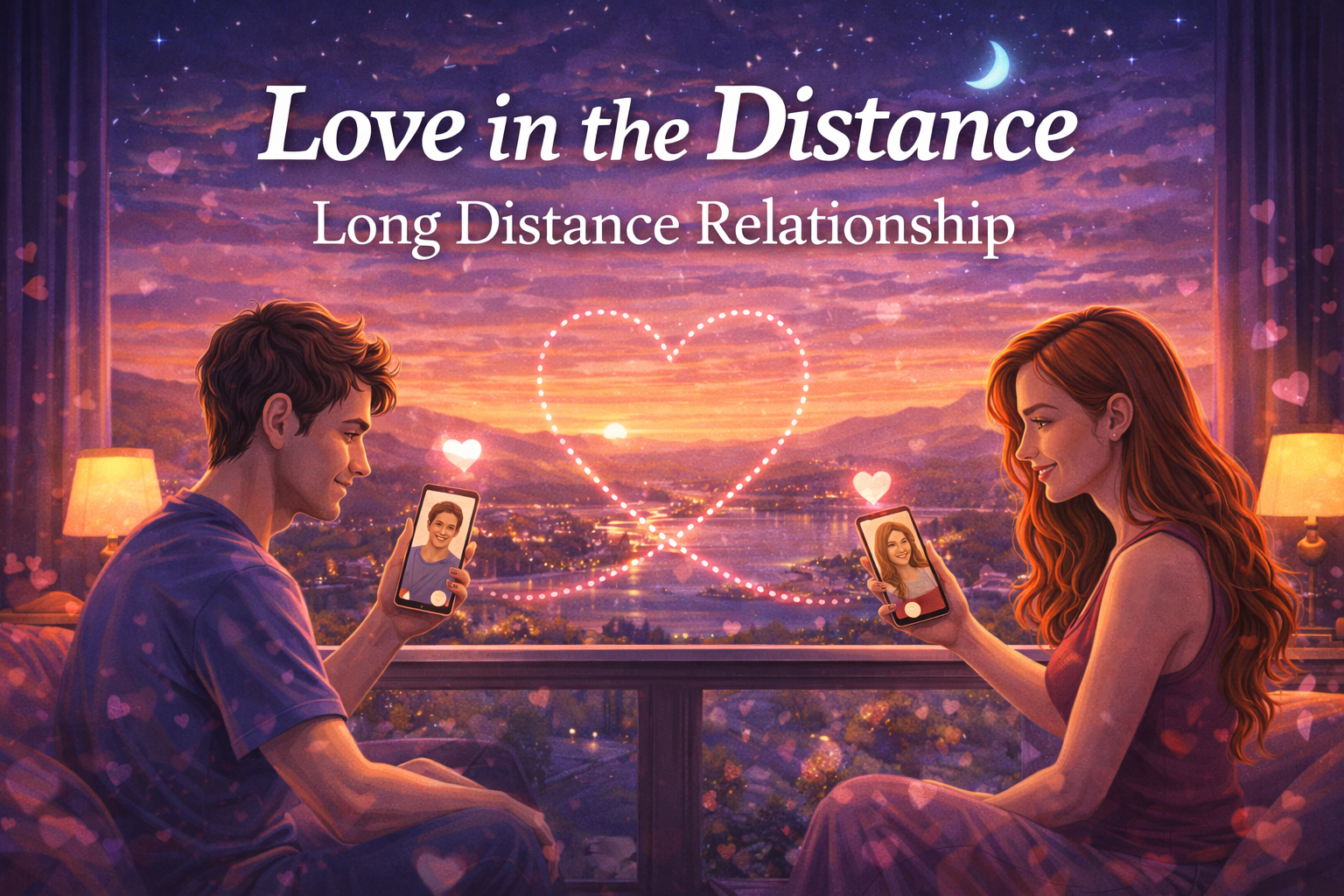
Long-distance relationships are no longer the exception; they are a structural feature of modern life. The internet, affordable travel, and globalized labor markets have made connection easier than ever, yet, paradoxically, they have also made separation more common, more normalized, and more unavoidable. Many couples do not choose distance as a romantic experiment; distance is imposed by economic necessity, migration, deportation, war conscription, unstable governments, or the simple reality that meaningful work is often not where love happens to be.
WHY ARE SO CLOSE YET SO FAR?
We live in the most interconnected era in human history, yet we rarely experience this interconnectivity as a gift. More often, it feels like an intrusion, an illusory barrier papered over with video calls, time zone math, and half-presence. Yes, technology is better than letters that take a year to arrive from a battlefield, only to learn your lover has moved on. But “better than tragedy” is a low bar for intimacy.
This article reframes long-distance relationships not as a logistical problem to endure, nor as a romantic fantasy to idealize, but as a relational challenge that demands intentionality, creativity, and emotional maturity. The question is not whether technology can keep love alive, it can. The real question is whether we use technology merely to cover needs, or whether we learn to leverage it to expand intimacy rather than postpone it.
The Question, and Why It Is Wrong
The most common question people ask about long-distance relationships is deceptively practical:
“How do we make it work?”
Underneath that question usually hides a more anxious one:
“How do we survive this until real life resumes?”
This framing is already a problem.
It assumes that:
- Distance is a temporary suspension of “real” intimacy
- Technology is a consolation prize, not a medium of connection
- The relationship is on hold, waiting for geography to cooperate
When distance is treated purely as an obstacle, couples fall into survival mode. Communication becomes transactional. Calls become check-ins. Texts become proof-of-life. Intimacy becomes something you remember or promise, rather than something you inhabit.
This mindset quietly erodes desire and presence.
Distance is not hard because you can’t touch each other every day. Distance is hard because it exposes everything you were unconsciously outsourcing to proximity: reassurance, routine, shared environment, and unspoken emotional regulation.
And unlike romantic myths, many long-distance relationships are not born from adventure or choice. They are born from necessity. People commute because the only decent job is in another city. People migrate because their country can no longer sustain them. People are separated by visas, borders, deportations, or war. The world is connected not because it is peaceful, but because it is unstable.
So asking “How do we make this work?” as if distance were a quirky inconvenience misses the deeper truth. The real question is:
“How do we remain emotionally alive, bonded, and intentional when distance is not optional?”

The Reality of Distance in a Globalized, Unstable World
We often romanticize long-distance relationships as a modern luxury made possible by Wi-Fi and budget airlines. But historically, distance in love has almost always been tied to hardship: sailors, soldiers, migrants, laborers.
What’s different now is speed and visibility. We can see our partner’s face instantly. We can message them constantly. We can track their location, activity, and availability. This creates the illusion of closeness without the embodiment of it.
Yes, this is infinitely better than waiting a year for a letter from the front lines. But it introduces a new psychological challenge: partial presence. You are close enough to miss each other acutely, but far enough to be unable to resolve that longing physically.
Research from the Journal of Communication shows that couples in long-distance relationships often report more meaningful conversations than geographically close couples. Distance forces intentional communication. Emotional intimacy becomes foregrounded.
But depth alone is not enough.
Without creativity and structure, depth turns into intensity, intensity turns into exhaustion, and exhaustion turns into quiet resentment.
The Restructuring, From “Enduring Distance” to Designing Intimacy
The healthier reframing is not “How do we endure distance?” but:
“How do we actively design intimacy across distance?”
Distance cannot be erased, but it can be worked with.
This requires abandoning the idea that technology is a substitute for “real” connection and embracing it as a medium with its own affordances. Video calls are not worse than dinner dates; they are different. Texts are not shallow; they are asynchronous emotional traces. Voice memos carry tone, breath, and presence in ways that written words cannot.
When used intentionally, technology doesn’t just maintain connection, it reshapes it.
Virtual Dates Are Not Consolations, They Are Shared Worlds
Virtual date nights fail when they try to imitate physical dates too closely. They succeed when they create shared experiences.
- Exploring a museum together on Google Arts & Culture.
- Cooking the same recipe in different kitchens.
- Watching a movie simultaneously while commenting in real time.
- Good old sexting!
These are not gimmicks. They are rituals.
Shared experiences generate shared memory, and shared memory is one of the pillars of intimacy. You are not “killing time until reunion.” You are living a parallel life together.
Written Words in a Disposable World
In a culture of instant messaging, intentional writing becomes intimate again.
Emails that aren’t about logistics. Voice memos sent without expectation of immediate reply. Handwritten letters that take time, effort, and vulnerability. These are not nostalgic gestures, they are acts of presence.
There is something grounding about receiving a tangible or intentional artifact of someone’s attention. It says: “I slowed down for you.”
In a world optimized for speed, slowness becomes erotic.
Creative Communication Beats Constant Communication
Many long-distance couples burn out not because they communicate too little, but because they communicate without texture.
Constant “What are you doing?” updates flatten desire. Creative communication expands it.
Emoji-only conversations. Shared playlists that evolve with your moods. A joint blog, journal, or notes document. Digital picture frames where you surprise each other with images mid-day. These practices turn communication into play rather than obligation. Play is not optional in long-distance love. It is survival.

Time Zones Are Not Just Logistics, They Are Acts of Care
Navigating time zones is not about efficiency; it is about consideration.
- Shared calendars.
- World clocks.
- Knowing when your partner is likely tired, stressed, or free.
Scheduling calls becomes a love language. It says: “I am holding your life in mind, not just my need for you.”
Presence is not measured by frequency, but by attunement. As Hunt Ethridge put it: “Love is missing someone whenever you’re apart, but somehow feeling warm inside because you’re close in heart.” That warmth doesn’t happen automatically, it is cultivated.
Gaming, Competition, and Teamwork Across Distance
Turn-based games like Words with Friends or asynchronous online games are surprisingly powerful relational tools.
They allow:
- Interaction without immediate coordination
- Friendly competition without emotional stakes
- A sense of “us” working toward or against something together
You don’t need constant availability. You need ongoing connection. Distance relationships thrive when partners stop demanding synchronicity and start valuing continuity.
Visits, Spontaneity, and the Myth of Constant Reunion
Travel is often idealized as the ultimate antidote to distance. And yes, seeing each other matters. Physical presence recalibrates the nervous system.
But visits alone do not save long-distance relationships. In fact, poorly integrated visits can make things worse, creating emotional whiplash: intensity, then absence.
The goal is not constant reunion. The goal is integration. Visits should feel like extensions of the relationship, not escapes from it.
Planning the Future Without Turning It Into a Countdown Prison
Talking about the future is not about setting deadlines to endure suffering. It is about creating shared orientation.
- Living in the same city.
- Closing the distance.
- Traveling together.
- Building a life that eventually converges.
A shared vision provides meaning. But it should inspire, not suffocate.
Long-distance relationships collapse when the future becomes a vague fantasy or a rigid ultimatum. They thrive when the future is a direction, not a timer.
Surprises, Gifts, and Sensory Anchors
Care packages. Books. Notes. Objects that carry scent, texture, weight.
Physical tokens anchor emotional reality. They remind the body that the relationship exists beyond screens.
These gestures are not about spending money. They are about evidence of listening.
Why Distance Feels Harder Than It “Should”
Distance hurts not because love is weak, but because love is embodied.
We are not designed to love only through language. We regulate through proximity, touch, and shared environment. Long-distance relationships require us to learn new regulatory skills instead of relying on instinct.
This is why distance exposes cracks quickly:
- Avoidant partners drift.
- Anxious partners escalate.
- Unspoken resentments amplify.
Distance doesn’t create problems, it reveals them.
Conclusion? Leveraging Technology Instead of Letting It Hollow Us Out
Distance means so little when someone means so much, but only if that meaning is actively expressed.
We cannot return to a world without borders, conflict, or economic pressure. Distance is not going away. The question is whether we let it reduce relationships to maintenance mode, or whether we rise to the challenge of intentional intimacy.
Technology can be a bandage, or it can be a bridge. The difference lies in presence. Love across distance is not about pretending separation doesn’t hurt. It is about refusing to let separation make the relationship smaller.
When creativity replaces resignation, when intention replaces habit, and when presence replaces pressure, distance stops being an enemy. It becomes a medium. And love, when consciously practiced, learns how to travel.
