


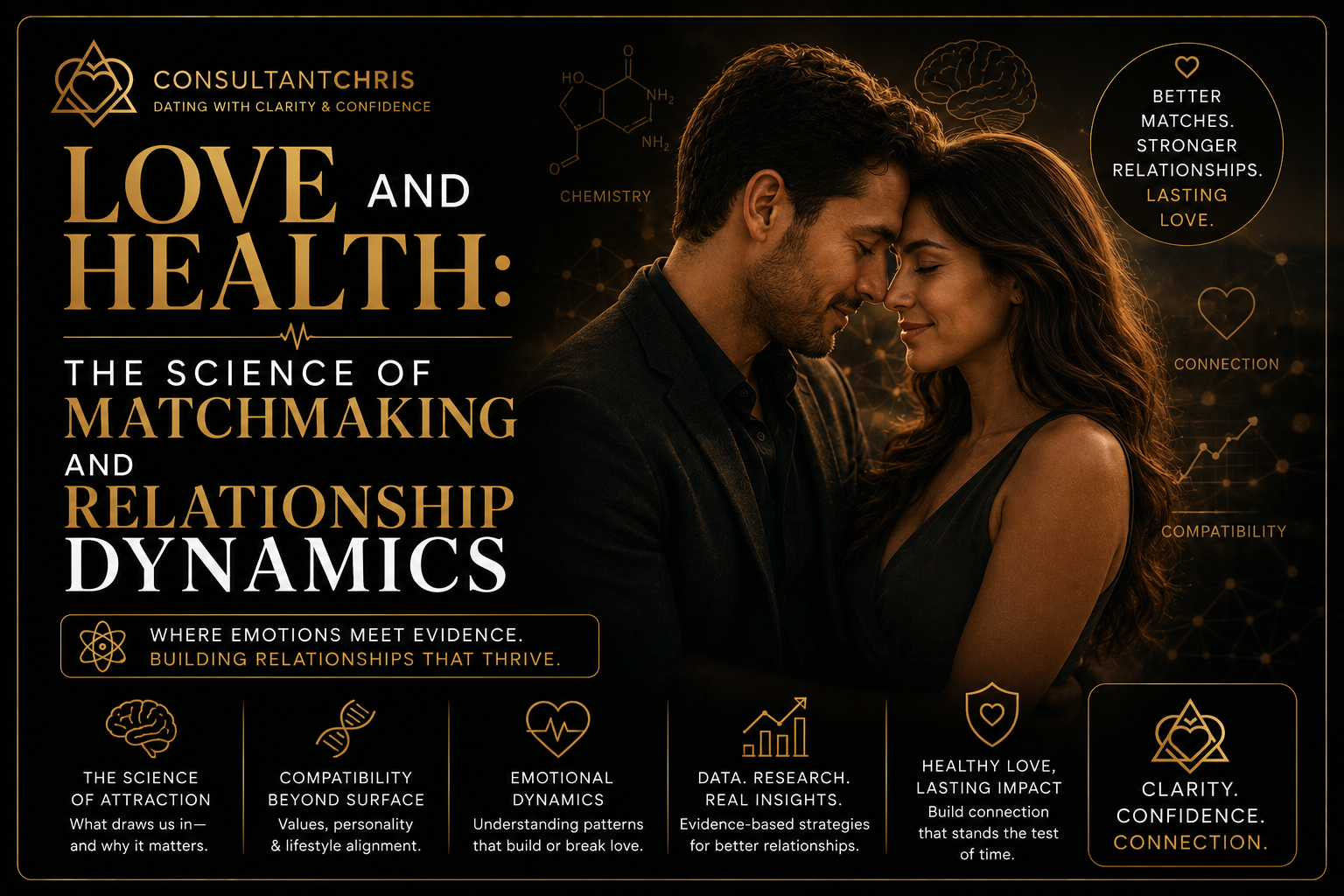

Love is one of those things people keep trying to define, but it always slips a little through the fingers. It shows up as excitement, as comfort, as nervous energy before a first date, and sometimes as quiet companionship that builds over years without anyone really noticing when it started. Hunt Ethridge, a writer for DatingAdvice.com, once said that love is not just about finding the right person, but about creating the right relationship, and that idea sticks because it shifts the focus away from luck and toward effort, timing, and emotional awareness.
When you look at love from a wider lens, it becomes clear that relationships are deeply tied to both mental and physical health. They are not just emotional experiences that live in the mind, they actually shape the body in ways people often underestimate. The way someone meets a partner, whether through matchmaking or through everyday life, can influence stress levels, expectations, and long term well being. And then once the relationship exists, the daily emotional climate between two people can either support health or slowly wear it down.
The process of matchmaking itself carries a certain weight. There is often an invisible audience involved, even if no one says it out loud. Family members, friends, and sometimes even cultural expectations all sit quietly in the background, influencing how a person feels about the situation. Being introduced to someone with the idea that this could turn into something serious can feel exciting at first, but that excitement tends to mix with pressure pretty quickly. People begin to wonder if they are presenting themselves well enough, if they are living up to what others expect, or if they are making the right choices. That kind of mental loop can become exhausting.
Take someone like Sarah, for example. She was introduced to her partner through a matchmaking service that her family arranged. At the start, she felt hopeful and even a bit thrilled about the idea of meeting someone in such a structured way. But over time, the pressure began to build. She started worrying about whether her family approved, whether she was behaving the right way, and whether the relationship was progressing fast enough. Those thoughts did not just stay in her head, they followed her into her sleep, her work, and her daily routines. She noticed she was more restless at night and less focused during the day, and it slowly affected her overall sense of well being.

On the other side of things, relationships that grow more organically tend to carry a different emotional tone. When people meet through shared experiences, mutual friends, or even random encounters, the connection often develops at its own pace. There is usually less external pressure guiding the relationship, which allows both individuals to explore their feelings more freely. Hunt Ethridge also mentioned that the best relationships are often the ones you never saw coming, and that idea reflects how natural connections can feel less forced and more genuine.
John and Maria are a good example of this kind of dynamic. They met through a group of friends and spent time together casually before anything romantic developed. There was no expectation from the outside world pushing them in a certain direction, so they were able to build trust and emotional closeness gradually. Over time, they found themselves becoming more important to each other, and the relationship grew in a way that felt comfortable rather than stressful. Because of that, both of them experienced a sense of emotional stability that supported their mental health rather than challenging it.
Even though every relationship is different, the level of stress involved can play a major role in shaping long term health outcomes. Chronic stress, especially when it comes from ongoing relationship tension, has been linked to several serious health issues. People who are constantly dealing with emotional strain may face higher risks of heart disease, depression, and weakened immune function. It is not always obvious in the beginning, but over time the body starts to reflect what the mind has been carrying.
From a medical standpoint, the connection between emotional life and physical health is very real. When someone is under stress, the body releases hormones like cortisol, which are helpful in short bursts but harmful when they stay elevated for long periods. High cortisol levels can lead to weight gain, increased blood pressure, and a reduced ability for the immune system to fight off illness. In contrast, positive emotional states can support better health by lowering stress responses and promoting a stronger immune system. It is almost like the body keeps score of how safe or threatened a person feels in their relationships.
Relationship stress can also make existing medical conditions worse. People dealing with cardiovascular issues, digestive problems, or chronic pain often notice that their symptoms flare up during times of emotional conflict. For example, someone who is constantly arguing with their partner might experience more frequent headaches or stomach discomfort. The body reacts to emotional tension in ways that can feel very physical, even when the source is not immediately visible.
Healthcare professionals see this connection quite often. Patients come in with symptoms that do not fully make sense until their personal lives are taken into account. A person with high blood pressure might also be dealing with ongoing marital conflict, or someone with an autoimmune condition might be going through intense emotional stress. These patterns show up again and again, making it clear that relationships are not just a background detail in someone’s life, they are a central part of overall health.
All of this points to something important. Love should add to a person’s life, not quietly take away from it. That does not mean every relationship has to be perfect or free of challenges, because that would be unrealistic. What it does mean is that people should pay attention to how they feel over time. If a relationship consistently brings stress, anxiety, or a sense of pressure that never really goes away, it may be worth stepping back and reevaluating what is happening.

Managing stress becomes a key part of maintaining both emotional and physical health in relationships. This can involve simple things like setting boundaries, communicating openly, and making time for rest and personal space. It can also mean seeking support when things become overwhelming, whether that comes from friends, family, or professional help. Ignoring stress does not make it disappear, it just lets it build up quietly until it starts affecting other areas of life.
There is also something to be said about expectations. When people enter relationships with very rigid ideas of how things should look or progress, they often set themselves up for disappointment. This is especially true in match made situations where there may be a timeline or a set of standards that feel imposed from the outside. Letting a relationship develop in its own time, even within a structured context, can reduce some of that pressure and allow for a more genuine connection.
At the same time, organic relationships are not automatically free of stress. They can still face challenges, misunderstandings, and emotional ups and downs. The difference often lies in how those challenges are approached. When both individuals feel that they are choosing the relationship freely, rather than fulfilling an expectation, it can create a stronger sense of partnership and resilience.
In the end, love is not just about the moment of meeting someone or the excitement of the early stages. It is about the ongoing experience of being connected to another person and how that connection shapes daily life. It influences sleep, mood, energy levels, and even physical health in ways that are sometimes subtle and sometimes very clear. People tend to underestimate how much their relationships affect their bodies, but the evidence keeps pointing in the same direction.
So as people move through the search for connection, whether through matchmaking or through everyday encounters, it helps to keep one thing in mind. The goal is not simply to find someone, but to build something that supports well being over time. That means paying attention to emotional signals, managing stress, and being willing to adjust when something feels off. Love can be one of the most rewarding parts of life, but it also asks for awareness, patience, and a bit of honesty, even when that honesty feels uncomfortable.
And maybe that is where the real work of love happens, in those quiet moments where people choose to understand each other a little better, to handle stress a little more carefully, and to create a relationship that actually feels good to live in, day after day, even if its not always perfect.
The research keeps pointing to the same conclusion, connection is not random. What women actually want is backed by similar data, and age gaps turn out to matter less than assumed too.
