


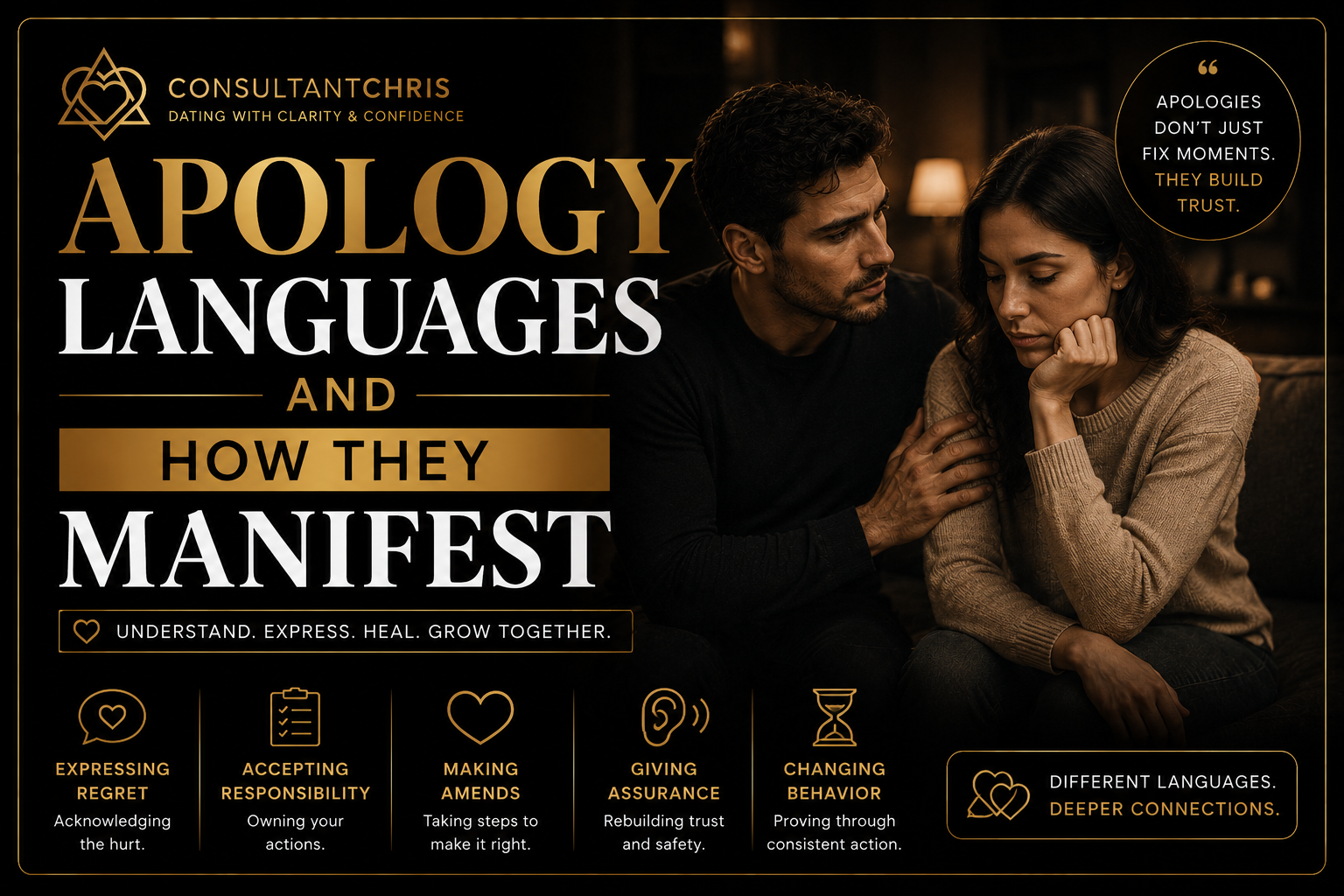
An apology sounds simple at first, just a few words or gestures pushed out into the air, but when you actually mean it, those few moves plus all the intent and emotion behind them can make a world of difference.

People move through life thinking saying sorry is automatically good and effective, like something you just drop into a moment and move on. Yet they miss how layered it really is and how two people can hear the exact same sentence and walk away with completely different meanings in their head.
There is this idea called apology languages and it explains something most people have felt at some point, that strange gap where one apology feels real and another feels empty even though on the surface they look almost identical.
The idea itself is built around five different ways people give and receive apologies, and each one carries its own meaning, its own signal, its own kind of proof that something has actually been understood. An apology is about showing that the weight of what happened is recognized and carried by the person who caused it, and that part gets missed more often than people admit. Therefore when someone uses the wrong apology language it can feel like they are speaking into a wall, like the words are there but they do not land anywhere, like the message just slides off without making contact even if the intention behind it was real.
The first apology language is expressing regret. This one sits right in the emotional space of the situation. It is about clearly saying that something wrong happened and that it actually feels bad to have caused it, not being forced though, in a way that sounds human. People who value this need to hear the feeling inside the words, they need to hear that the other person is not detached from what happened, that there is some kind of emotional awareness present. A flat apology with no tone, no weight, without pause to think and dig deep sounds empty to them, it sounds like a routine line being delivered just to get past the moment. So, expressing regret becomes about naming the hurt and owning the emotional impact in a way that carries something real behind it.
The second apology language is accepting responsibility, and this one shifts away from emotion and moves straight into ownership. It is about saying clearly that the action came from you, no excuses, no shifting blame, no trying to soften the edges of what happened. People listen for this more than anything else as they want to hear that direct acknowledgment that the person understands their role in the situation. Did you read that right? ROLE, not blame. Just your role. When someone starts explaining too much or trying to add context too quickly it can sound like avoidance, like the apology is being diluted before it even lands. Accepting responsibility strips all of that away and leaves a clear statement, the fault is mine and I see it without trying to hide from it. This isn´t about avoiding blame, or justifying it so well that you get to do it again, it´s about honestly saying. “Whether it was my goal or not, I hurt you. I´m so sorry. ANd it hurts me too”. When you mean it, that´s when you don´t do it again.
Then there is making restitution, which moves things out of words and into action. This one is about doing something to repair the damage instead of only talking about it, and for some people that difference matters more than anything else. Words alone do not satisfy them, they need to see effort, they need something concrete that shows the apology is not just temporary or convenient. Restitution through modified behavior, a gift or repair. It becomes a kind of “tangible proof”, it shows that the person is willing to invest something real, time or energy or resources, into fixing what they caused. It is not about making a transaction out of the situation, it is about showing commitment in a visible way that cannot be mistaken.

Genuinely repenting comes next and this one focuses on change, on what happens after the apology is spoken. It is about making it clear that the same mistake will not happen again because something has shifted internally, not just temporarily but in a lasting way. People who value this are looking forward more than backward, they are asking themselves if this situation is going to repeat or if it actually ends here, cause empty promises fall apart quickly in this space, since they sound good in the moment and may even be sincere; but the “changes” never take root, and the offending conduct reappears as soon as the fight and fear are forgotten. Repentance shows that the apology is tied to growth and not just to the discomfort of the moment.
As our final apology language we get the act of requesting forgiveness, and this one introduces a kind of vulnerability that people sometimes avoid. It involves directly asking the other person if they are willing to move forward and reconnect, instead of assuming that everything is fine now that the apology has been said. Some people need that invitation, like when you go out for dinner and you´re fully intent on paying for the table, but you still want to see your pals pull out their wallets. Except that this is fully honest and a way of showing that it isn´t just about saying the apology to get things back to normal, but truly fixing what went wrong and asking the other person for a place back in their life. Being open to the changes they need in order to forgive and accept again.

Understanding these apology languages changes the way people approach conflict in a real sense, not just in theory. It shifts the focus away from just saying sorry and toward actually communicating in a way that the other person can understand and accept. Meanwhile a lot of conflicts stretch out longer than they need to because the apology given does not match what the other person is waiting for. One person expresses regret while the other is waiting for responsibility, or someone promises change while the other is still looking for some kind of restitution. Choosing the right apology language in a situation is not automatic, it requires attention and a bit of awareness that people do not always slow down to use. The severity of the situation plays a major role in shaping what kind of apology is needed. Smaller mistakes might only need a simple expression of regret, something direct and honest that acknowledges what happened without overcomplicating it. Meanwhile more serious harm demands more depth, it calls for responsibility, for restitution, for a visible commitment to change that matches the level of damage done. The scale of the apology needs to match the scale of the situation or it starts to feel off balance.
The nature of the relationship also shapes how an apology should look and feel. Close personal relationships carry more emotional weight, they require sincerity and openness and a willingness to show vulnerability in a way that feels real. Therefore an apology in that space often leans into regret and repentance because those connect to emotional trust. Meanwhile in professional environments the tone shifts into something more structured, more focused on responsibility and restitution, something that resolves the issue clearly without drifting into unnecessary emotion. The context quietly changes everything about how the apology is received.
Another factor that often gets overlooked is the response of the person receiving the apology. Their reaction gives clear signals about whether the message is landing or missing the mark. If they seem calm or receptive then it suggests the apology is connecting in the way it needs to. And lets remember that cultural and social context also plays a role that people sometimes underestimate. Different groups have different expectations about how apologies should be delivered, what tone they should carry, what level of directness is appropriate. Some expect clear and direct acknowledgment while others value patience and humility in the delivery. Therefore understanding the environment prevents unnecessary misunderstanding that comes from mismatched expectations rather than actual intent.
At the center of all of this sits sincerity, and without it everything else falls apart pretty quickly. None of the apology languages work if the person does not actually mean what they are saying. Therefore honesty becomes the base that everything else builds on, it carries through every word and every action that follows. People can sense when something feels off even if they cannot explain it, and that instinct usually points back to a lack of sincerity. Meanwhile a genuine apology creates space for healing because it feels grounded and real in a way that does not need to be forced.
Timing matters more than people admit as well. The right time to apologize is as soon as the mistake is recognized, not after it has been pointed out or after time has created more distance. Waiting too long allows frustration to build and it can make the situation feel ignored. Therefore acting quickly shows awareness and responsibility, it shows that the person is not trying to avoid the situation or pretend it did not happen.
There is also the idea of readiness, which matters just as much as timing. An apology should come from a place where the person actually understands what they did and is willing to take responsibility for it. Saying sorry without that understanding creates something hollow that usually makes things worse instead of better. It says, “I don´t care what I did. I just want you to pretend everything is fine again… and I will do it again… cause I don´t even know what I did”.
An apology on its own does not always repair everything, and expecting it to do so can create more frustration. Some situations require follow through, they require actions over time that rebuild trust piece by piece. Therefore the apology becomes the starting point, not the final step. It opens the door to change and to repair and to rebuilding something that was damaged, while the actual rebuilding takes time and consistency.
Conclusion
People underestimate how much impact a well formed apology can have. It can reset a situation, it can clear tension that has been sitting quietly, it can create understanding where there was confusion or distance. Therefore learning how to apologize properly becomes something that shapes relationships over time in a very real way. It is not about getting it perfect every time, it is about being aware and willing to adjust and improve.
In the end apology languages come down to connection, to understanding how people interpret sincerity and how they recognize accountability when it shows up in front of them. Meanwhile every person carries their own expectations and their own way of processing harm, and recognizing that changes how communication happens. Therefore instead of repeating the same patterns and hoping they work, people can approach apologies with intention and a clearer sense of direction.
An apology is never just words, it is a signal that shapes what happens next. Therefore understanding how to use it well; changes how people move through conflict and how they rebuild after it, even if they do not realize it right away.
Knowing your own apology style is only half the picture. Apologising in a way that repairs things is the practical follow up, and it works best alongside losing the argument gracefully in the first place.
