


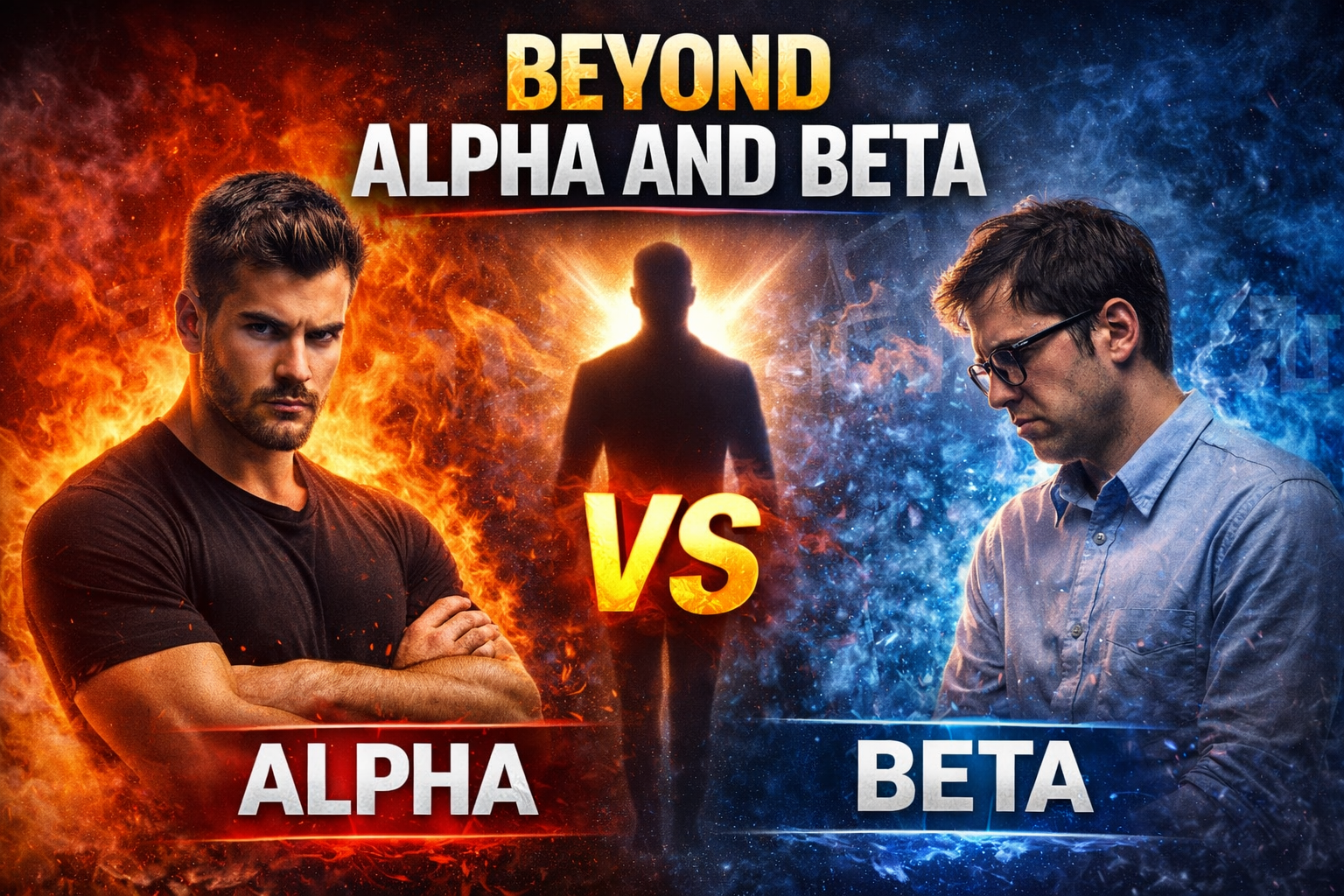
Simple labels fail men trying to build real connection
The alpha and beta debate sounds scientific but it never really was. The original wolf studies that people love to quote were done on captive animals under stress. Later research showed wild wolves behave more like families than rigid hierarchies. The idea of one dominant male ruling through force does not reflect how nature actually works. It is a story people kept repeating because it feels simple and dramatic. Men picked it up and turned it into identity. That is where things start to break down.
Even if the biology is shaky the behaviors are still real in a different way. Some men act in a pushy dominant way chasing status and control. Others shrink themselves and avoid conflict hoping to be liked. These patterns exist but they are not fixed roles. They are habits. Calling them alpha or beta makes them feel permanent when they are not. This is where the idea of the sigma shows up as a response. Not as a lone wolf fantasy but as a needed shift. A man who can step outside the false choice. Someone who leads himself first and understands people instead of trying to rank above them. Emotional intelligence becomes the real skill here and not dominance or submission.
A man who leans only into dominance often burns out his relationships. He might get attention but struggles to keep trust. A man who leans only into passivity often feels invisible and builds quiet resentment. Neither approach creates stability. The bridge between them is not neutrality but awareness. A sigma mindset in this sense is not about isolation. It is about choice. Knowing when to step forward and when to step back. Being grounded enough to not chase validation but open enough to connect. That balance is what actually creates influence over time.

There is growing research that supports this kind of balanced masculinity. One study from the Journal of Personality and Social Psychology found that “men who display emotional attunement and responsiveness report higher relationship satisfaction and partner retention over time compared to men high in dominance alone.” This matters because it shifts the goal. It is not about how many people someone attracts in a short burst. It is about the quality and stability of the connection they build. Emotional intelligence is not a soft trait; it is a functional one.
Men who develop empathy and self regulation tend to do better in long term outcomes. Not just in relationships but in general life satisfaction. They communicate more clearly. They handle conflict without escalation. They create environments where their partner feels safe to be honest. This leads to deeper bonds. It also reduces the cycle of short intense connections that fall apart quickly. A sigma type approach fits here not as a label but as a practice. Independence without disconnection. Strength without rigidity. Confidence without noise.
It is also important to correct a common misunderstanding. Doing better in the long run does not mean dating more people. In fact it often means the opposite. Fewer but more meaningful connections. Men who focus on emotional intelligence tend to filter for compatibility earlier. They are not chasing every opportunity. They are paying attention to alignment. This leads to relationships where both people feel seen and respected. Satisfaction becomes mutual not one sided. That is a very different metric than what the alpha narrative usually promotes.
Another key factor is adaptability. Life changes and relationships evolve. A rigid identity makes that harder. If a man sees himself only as dominant he may struggle when vulnerability is required. If he sees himself only as agreeable he may struggle to set boundaries. A sigma approach allows movement between modes. It accepts that strength can look different depending on the moment. This flexibility is what keeps relationships alive over time. It allows growth instead of forcing performance.

Conclusion
The alpha beta frame is too narrow to guide real growth. It reduces complex behavior into simple roles that do not hold up under pressure. What actually works is awareness and adaptability. Men who build emotional intelligence create better outcomes over time. They form deeper connections and more stable relationships. The sigma idea has value only if it points toward that balance. Not isolation, not dominance but grounded self leadership. That is what lasts.
