


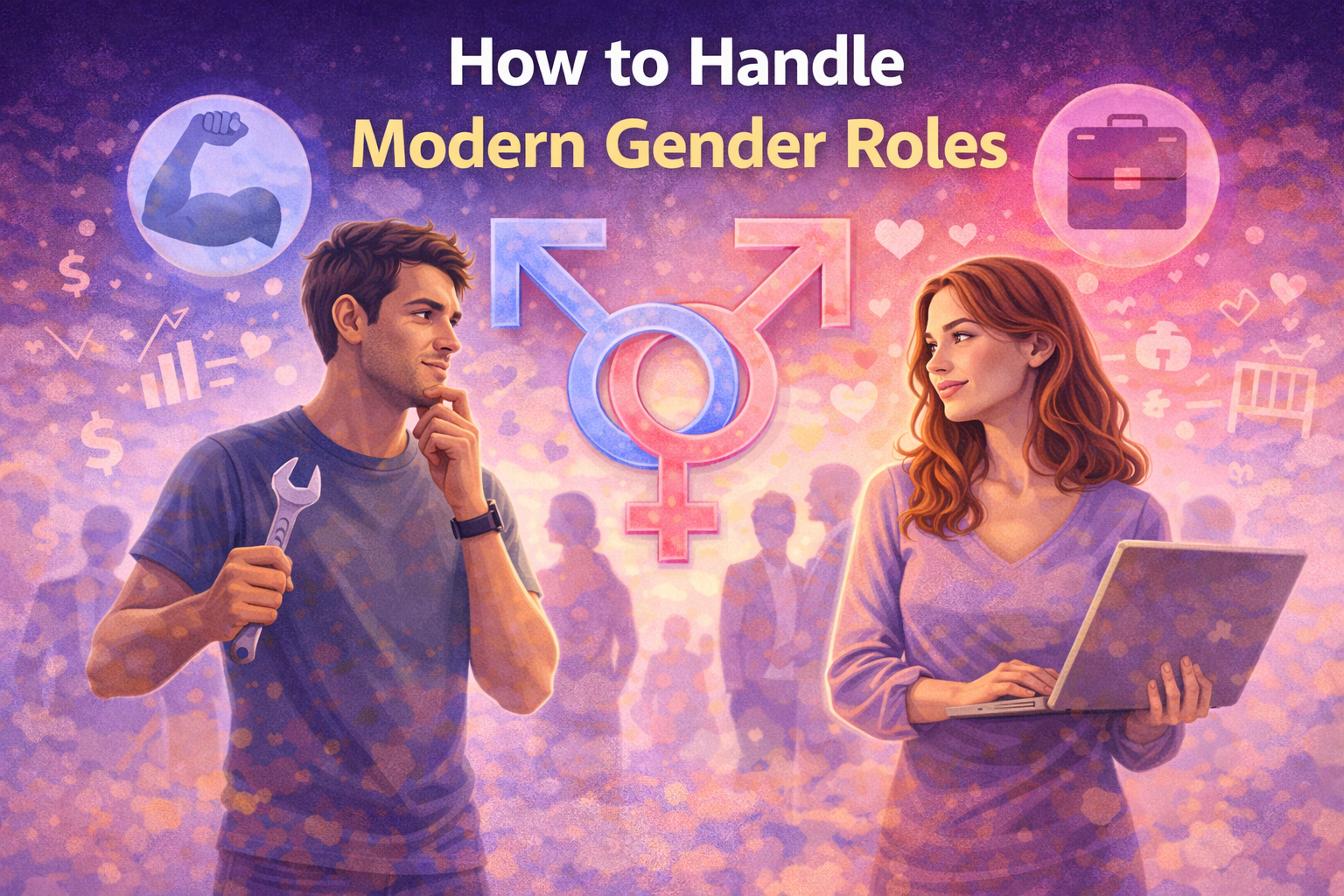
Gender roles are no longer stable landmarks; they are shifting sands. What once felt like a shared script: who leads, who provides, who nurtures, who sacrifices, who builds, who raises… Is no longer as clear cut, instead this landscape has fractured under the weight of cultural change, economic pressure, globalization and individual awakening. And yet many people still enter relationships carrying unspoken expectations, assuming their partner will just know how to give them what they want.
Gender roles used to act like a shared map. And expectations were clear: Who leads? Who provides? Who nurtures? Now that the map is blurred. Culture shifted. Economics shifted. Identity shifted. But many people still enter relationships assuming their partner knows the part they are supposed to play. That is where trouble starts.
Clarity and Flexibility
Mature relationships require two things at once. Be clear about what you want. And accept that your partner was not raised in your house, with your rules, or your nervous system.
Expecting perfect alignment without conversation is lazy and mad. Even in similar cultures, people interpret money, work, sex, family, and power differently. If you do not state your expectations, you do not get to resent unmet ones. And even when you do express them, you do not get to be angry at a clear and honest rejection. At that point, you simply get to choose whether you can compromise on that… forever… or whether you´d rather walk away early, before passion turns to hatred and resentment.
Gender Roles Still Linger
Even people who reject stereotypes fall back into them under stress. Who initiates. Who pays. Who apologizes first? Who sacrifices more? When these expectations stay unspoken, disappointment builds quietly. You think: They should know. They think: I am doing my part. Both feel unseen and righteous. The relationship dies apparently through no one´s fault, for no one did anything wrong… but also nothing right.
Modern Relationships Are Negotiated
There is no universal script anymore. Not in heterosexual couples. Not in queer couples. Roles are not destiny. They are choices. And choices require discussion. Healthy couples build agreements instead of relying on assumptions. Agreements about money. Emotional labor. Intimacy. Independence. Conflict repair. These evolve over time. Flexibility is not weakness. It is adaptation without contempt. Agreements aren´t passion killers; they are boundary definers, so you can explore the relationship with peace and devotion.
Sameness Is Overrated
Many people want a partner who mirrors their worldview. That feels safe. But growth comes from challenge, not duplication. The key is knowing the difference between core values and flexible preferences. Silence feels peaceful, but breeds resentment. Dialogue feels uncomfortable but builds trust.

Conclusion
Strong relationships require backbone and bend. Clarity without flexibility becomes control and cohesion, while flexibility without clarity is how you lose yourself. Stop asking if your partner fits a role and start asking if you have actually analyzed how you want the relationship to function, if you have expressed correctly what you expect, and opened yourself up to an honest answer, or even rejection. If so, maybe you´re ready to start a serious relationship.
At that point, remember, gender roles are more guides than rules. We need to think of them as both important foundations for the relationship and flexible challenges that have to be tackled together or by the most qualified partner. Is good to set expectations early in the relationship about who will work while the other studies, or how many children you want. Or whatever it is that you expect and can offer in return. But in the end it´s all about communicating honestly, juggling the many plates that life throws at you, asking for help when overwhelmed, and standing up to the occasion when needed. And those are genderless qualities.
