


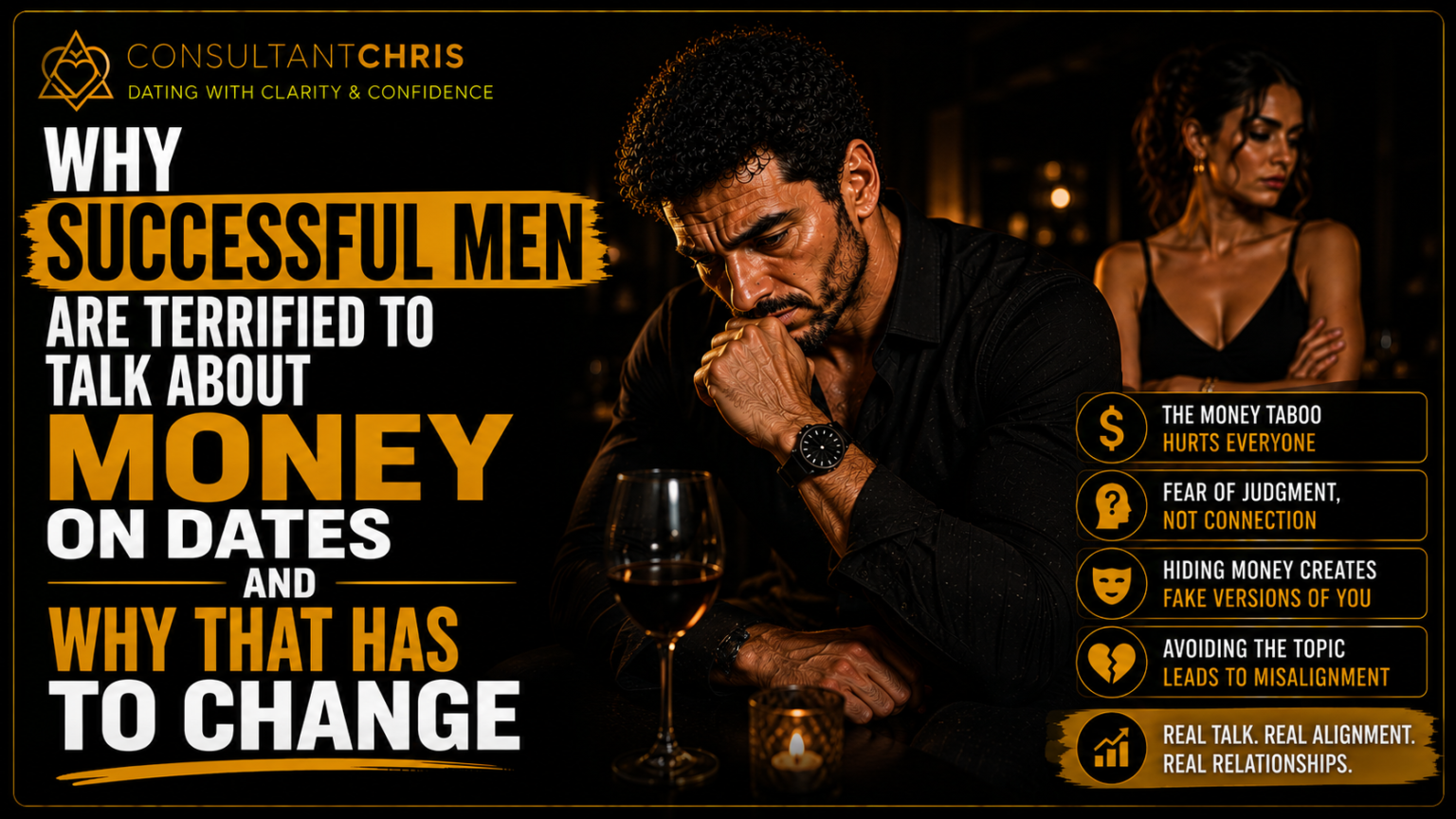
Here’s a scenario I’ve heard described to me more times than I can count.
A high-earning man is on a date with a woman he genuinely likes. The conversation goes well. They’re connecting. And then money comes up either she asks what he does and the salary implication is obvious, or the restaurant bill arrives and it becomes clear that he’s not exactly watching his budget, or she mentions something about her own financial situation and it creates an opening.
And something seizes up in him. He deflects. He undersells. He changes the subject. Or he overcorrects in the other direction and leads with it in a way that reads as showing off. Neither lands well. And afterward, he’s not even entirely sure what he was afraid of.
This particular anxiety the discomfort that accomplished men feel around money and dating is one of the more interesting psychological tangles I encounter in this work. Because on paper, financial stability is a genuinely positive thing to bring to a relationship. And yet for many successful men, it produces a specific kind of relational awkwardness that they handle much worse than men with far less.
Let me explain what’s actually happening and what to do instead.
The Fears Underneath the Awkwardness
When I dig into this with clients, there are usually a few distinct fears running simultaneously, and they pull in opposite directions.
Fear of Being Wanted for the Wrong Reasons

The successful man who has built something real worries consciously or not that his financial status is what’s attracting interest rather than who he actually is. This fear has a name in popular culture: the gold digger narrative. And while the extreme version of that dynamic is real and worth being alert to, the fear often runs much hotter than the actual risk, particularly when you’re meeting and dating women who are themselves educated and professionally established. Treating every woman as a potential gold digger is both inaccurate and deeply off-putting.
Fear of Inauthenticity in the Other Direction
Some men are so afraid of seeming like they’re using money to compensate for something else that they go out of their way to conceal or downplay their financial situation. This creates its own problems. It’s dishonest, it often reads as strange, and it sets up a weird dynamic where an important piece of context is being actively hidden from someone you’re trying to genuinely connect with.
Fear of Changing the Dynamic
Particularly in early dating, there’s a worry that introducing financial information will shift how she sees him that she’ll either start treating him differently in ways that feel uncomfortable, or that she’ll feel some form of pressure or inequality in the dynamic.
What Emotional Intelligence Says About All of This

Self-awareness, first: what are you actually afraid of in this specific interaction? Not the generalised fear, but the precise one. The man who can name his fear accurately is already in a much better position than the one who’s just vaguely uncomfortable and deflecting.
Self-regulation second: the anxiety around this topic doesn’t need to run the conversation. You can notice it, set it aside, and engage with the topic as the straightforward, non-loaded thing it actually is. Money is part of life. It’s not shameful to have some. It’s not shameful to discuss it in normal, human terms.
Empathy third: think about what she’s trying to understand when financial topics come up. In most cases, she’s trying to figure out whether you share similar values around money, whether you’re responsible, whether there are any major incompatibilities in how you approach finances. She is not, in the vast majority of cases, running calculations about what she can extract from you. Meeting her curiosity with openness rather than defensiveness produces a much better interaction.
What Gen Z and the Data Are Actually Showing
Here’s a trend worth knowing about. Research consistently shows that younger generations and increasingly, all daters are moving toward much earlier and more direct conversations about financial situations and values. Tinder data shows financial transparency appearing consistently in what daters describe as important early in relationships. Gen Z couples, in particular, are normalising money conversations as a standard part of early dating rather than something that belongs behind closed doors until commitment is established.
This shift makes sense. Financial incompatibility is one of the most reliable predictors of relationship breakdown. Discovering major differences in financial values after significant emotional investment has been made is painful and avoidable. Having an honest, relaxed conversation about money your values around it, how you manage it, what role it plays in your life early in a relationship is not transactional. It’s mature.
How to Actually Handle It
The goal isn’t to either lead with your income as a selling point or to hide it anxiously. The goal is to talk about money the way you’d talk about any other important aspect of your life honestly, without excess weight in either direction.
If your career and success come up naturally, let them. You don’t need to apologise for what you’ve built. You also don’t need to make it the headline. It’s one part of who you are, not the whole story.
If she asks directly about money your job, your lifestyle, how you approach finances answer honestly and then get curious about her. ‘I’ve been fortunate in my career and I take my finances seriously. How about you do you think about money as part of what you look for in a relationship, or is that something you’d rather figure out as things develop?’ That question does two things: it answers her directly and turns the conversation into something you’re doing together rather than something she’s doing to you.
The man who can talk about money with calm, honest ease is demonstrating exactly what women are looking for: emotional groundedness, security that doesn’t come from external validation, and the confidence to engage with real topics without flinching. That’s attractive. The deflection and the anxiety are not.
The fear is rarely about the money itself. It usually connects to a bigger career identity issue, and it shows up again in why high earning men get ghosted more than anyone else.
