


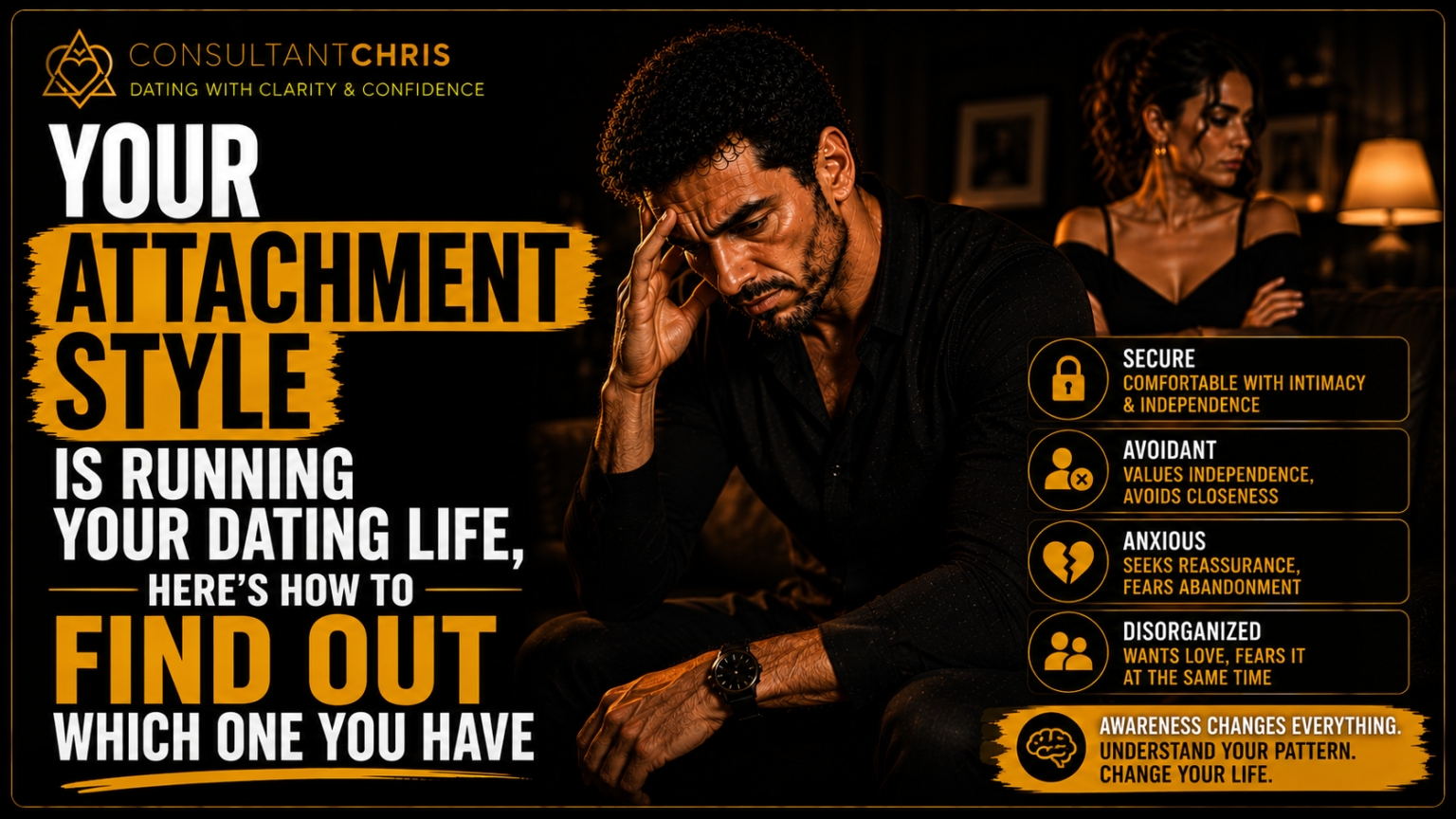
There’s a concept from developmental psychology that has become one of the most searched terms in the dating space and for genuinely good reason. It explains, more precisely than almost anything else I know, why smart, well-intentioned people keep ending up in the same relational patterns regardless of how much they want something different.
Attachment theory. Specifically, the idea that the emotional dynamics of your earliest close relationships usually with caregivers in childhood create a template that your nervous system uses to navigate closeness and intimacy for the rest of your life.
Now, before you close this tab because it sounds like therapy content stay with me. Because this is one of the most practically useful frameworks I’ve encountered for understanding what’s actually happening in your dating life. Not in some abstract, long-term-healing sense. Right now, in the conversations and connections and patterns you’re experiencing today.
The Three Main Attachment Styles

Secure Attachment
Securely attached people are generally comfortable with both intimacy and independence. They can be close to someone without losing themselves in the dynamic. They communicate needs directly and without excessive anxiety. When conflicts arise, they address them without catastrophising. When things go well, they enjoy it without hypervigilance about when it will end.
In dating, secure people tend to move at a natural pace, express interest clearly without desperation, and create an environment where the other person feels safe to do the same. Research consistently shows that securely attached individuals have longer, more satisfying relationships. They’re also the minority which tells you something about why dating is hard for so many people.
Anxious Attachment
Anxiously attached people crave closeness and connection deeply but are hypervigilant about potential rejection. They tend to overmonitor signals from the other person, read into small things, and become distressed when contact is less frequent or less warm than they’re used to. Their biggest fear is abandonment and the behaviour that fear produces often creates the very outcome they’re afraid of.
In dating, anxious attachment often looks like: intense early connection that moves very fast, difficulty tolerating the natural ebb and flow of a developing relationship, coming on too strong when they sense distance, or constant seeking of reassurance that the connection is still intact. If you’ve ever looked back at the way you behaved in a relationship and thought ‘why did I do that’ anxious attachment is often the answer.
Avoidant Attachment
Avoidantly attached people have learned, usually early in life, that depending on others is unsafe or unreliable. They’ve developed strong self-sufficiency as a protective mechanism and tend to feel uncomfortable with too much closeness or emotional demand. They value independence highly, sometimes to a degree that keeps genuine intimacy at bay.
In dating, avoidant attachment often looks like: pulling back when things get serious, feeling suffocated by partners who want more closeness, strong attraction to people who aren’t fully available, difficulty with the vulnerability that real commitment requires. They often want connection genuinely, but the getting-close part triggers something that drives them to create distance.
Why This Matters More Than You Think
Most people aren’t purely one style. Many high-achieving men have a combination of avoidant tendencies developed as a self-protective response to early experiences, with anxious elements that surface specifically in romantic contexts. Understanding your particular pattern, not just the label but the specific way it shows up in your behaviour is genuinely useful.
Because here’s what happens without this understanding: you experience the pattern, it produces a painful outcome, you blame the other person or the circumstances, and you repeat the pattern in the next relationship. The geography changes. The emotional dynamic reproduces itself.
With the understanding: you start to see the pattern as it’s happening. You notice ‘I’m pulling back because closeness is making me uncomfortable, not because anything is actually wrong.’ Or ‘I’m overreacting to that short text because my anxious system is interpreting it as rejection.’ That’s self-awareness. And self-awareness is the first step toward choosing a different response.
How to Figure Out Your Style

There are several validated assessment tools available online, the Experiences in Close Relationships scale is one of the most research-backed. It gives you a positioning across the anxious and avoidant dimensions that is more nuanced than a simple label.
But you can also get significant insight just by reflecting honestly on your patterns. Ask yourself: when things get serious in a relationship, what do I typically do? Do I lean in harder, looking for more reassurance? Or do I create distance, getting busy or emotionally cooler? What does conflict tend to produce in me, anxiety that things are over, or a desire to withdraw until it’s resolved? How do I feel when a partner expresses strong need for me nurtured or suffocated?
Your honest answers to those questions will tell you a great deal about your attachment orientation.
The Path to Security
Here’s the part that doesn’t always make it into the popular attachment theory content: attachment styles are not fixed. The research is clear that secure attachment can be developed. This is called ‘earned security’ and it comes primarily from two sources: repeated experiences in relationships that challenge and update the original template, and the kind of deliberate self-awareness work that lets you see the pattern operating in real time rather than being run by it unconsciously.
The EQ work I do with men directly addresses this. Not because I’m running a therapy programme, I’m not but because self-awareness and self-regulation are the specific capabilities that allow an anxiously or avoidantly attached man to start behaving more securely. Not perfectly. Not overnight. But progressively, with real-world results that compound over time.
Your attachment style has been running your dating life. It doesn’t have to keep doing it.
Once you know your style, the patterns start making a lot more sense. Attachment styles in general is a good primer if you need one, and it often explains why you keep self sabotaging.
