


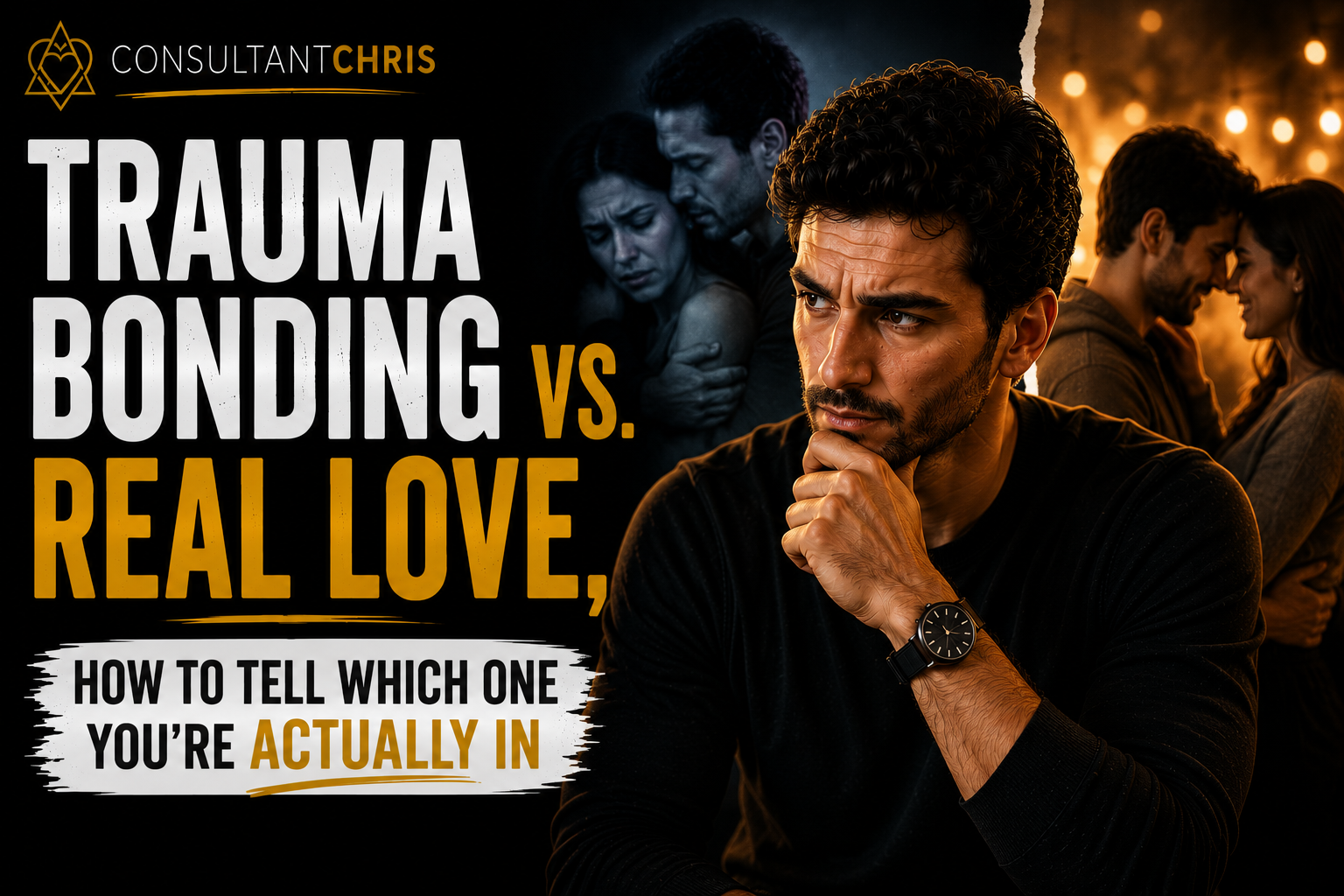
There is a specific kind of relationship that a surprising number of emotionally intelligent, self-aware men find themselves in and genuinely cannot explain why they keep staying.
It is intensely compelling. The highs are higher than anything they have experienced elsewhere. The connection feels profound, almost fated. And yet it is consistently painful. There are cycles closeness followed by distance, warmth followed by withdrawal, repair followed by the same rupture. They know, rationally, that something is not right. They cannot leave.
What they are often describing, without knowing the term, is a trauma bond. And understanding the difference between a trauma bond and genuine love is one of the most practically important things I can offer any man who finds himself in or emerging from one.
What a Trauma Bond Actually Is

A trauma bond is not a bond formed because you both experienced trauma. It is a powerful emotional attachment that forms specifically through cycles of pain and relief through the neurological impact of intermittent reinforcement combined with the intensity that high-stakes emotional experiences produce.
The mechanism: a relationship that alternates between moments of genuine warmth and closeness and moments of withdrawal, criticism, uncertainty, or emotional pain produces a neurological response that is structurally similar to addiction. The relief of the good moments, coming after the pain of the bad ones, registers as intensely rewarding in the brain’s reward system. The unpredictability of when the good moments will come creates the same anticipation loop that makes gambling compulsive.
The result is a bond that feels extraordinarily deep that produces genuine feelings of love, genuine feelings of loss when the connection is threatened but that is not built on genuine compatibility, mutual respect, or the kind of sustained safety and warmth that actually constitutes a healthy relationship. It is built on neurochemistry produced by a painful dynamic.
How to Tell the Difference
The most reliable distinction between a trauma bond and genuine love is this: genuine love makes you feel more like yourself. A trauma bond makes you feel more anxious, more uncertain about yourself, and more preoccupied with the relationship the more time you spend in it.
In Genuine Love
You feel settled rather than hypervigilant. You trust the other person’s care for you without needing constant reassurance. You can have conflict without catastrophising. Your life outside the relationship continues to function rather than shrinking around the relationship’s demands. You feel genuinely known, not just intensely wanted in certain moments. The relationship adds to your life rather than consuming it.
In a Trauma Bond
You spend significant energy trying to figure out what she is thinking, where you stand, what caused the last withdrawal. The relationship occupies mental space disproportionate to how much time you have actually been together. The highs feel extraordinary but the anxiety between them is chronic. You feel like you cannot leave even when you want to. You are a different, often diminished version of yourself in this relationship compared to who you are outside of it.
The intensity is the trap. Trauma bonds often feel more intense than healthy relationships, which creates the illusion that the intensity is evidence of depth. It is not. It is evidence of a nervous system in a state of chronic low-grade stress, calibrated to a painful cycle and mistaking the relief phases for love.
Why High-Achieving Men Are Vulnerable

The patterns that make high-achieving men effective professionally also create specific vulnerabilities to trauma bonding.
The problem-solving drive. When the relationship is painful, the analytical mind goes to work on fixing it. He analyses what went wrong, adjusts his approach, works harder at the connection. This effort keeps him engaged in a dynamic that a different person might have exited sooner. The investment of effort also increases the perceived value of the relationship we tend to value what we have worked for, even when the work itself is the problem.
The achievement orientation. For a man who succeeds at hard things, the implicit frame of leaving becomes one of failure. He does not give up on hard things. He does not quit. This reframe staying in a painful dynamic as a form of perseverance rather than wisdom is genuinely dangerous.
The emotional suppression pattern. Men who have not developed emotional awareness often cannot accurately name what they are feeling in the relationship. They know it is intense. They interpret the intensity as meaning. They cannot distinguish between the neurochemistry of a trauma bond and the genuine warmth of healthy love because they have not developed the self-awareness that makes that distinction accessible.
The Path Out

Exiting a trauma bond is harder than exiting most relationships because the bond itself resists exit. The anxiety of separation is intense. The good memories pull strongly. The cycle may include an especially warm period right when you are trying to leave.
What helps: naming it accurately. Calling it what it is not love that is complicated, but a bond formed through pain cycles that is not the same thing as love creates a degree of cognitive distance from the intensity. Getting support outside the relationship, specifically people who know you well enough to remind you who you were before this dynamic consumed you. And doing the deeper work of understanding what made you vulnerable to this particular dynamic in the first place because trauma bonds almost always connect to something in your attachment history that preceded the relationship.
Real love is not absent of difficulty. But it is not built on pain cycles. It does not require you to continuously earn your place. It does not shrink your world. You deserve to know the difference and to choose the real thing.
The intensity can feel identical even when the substance is completely different. Red flags are usually visible early if you’re honest with yourself, and this pattern often explains why men keep self sabotaging.
