


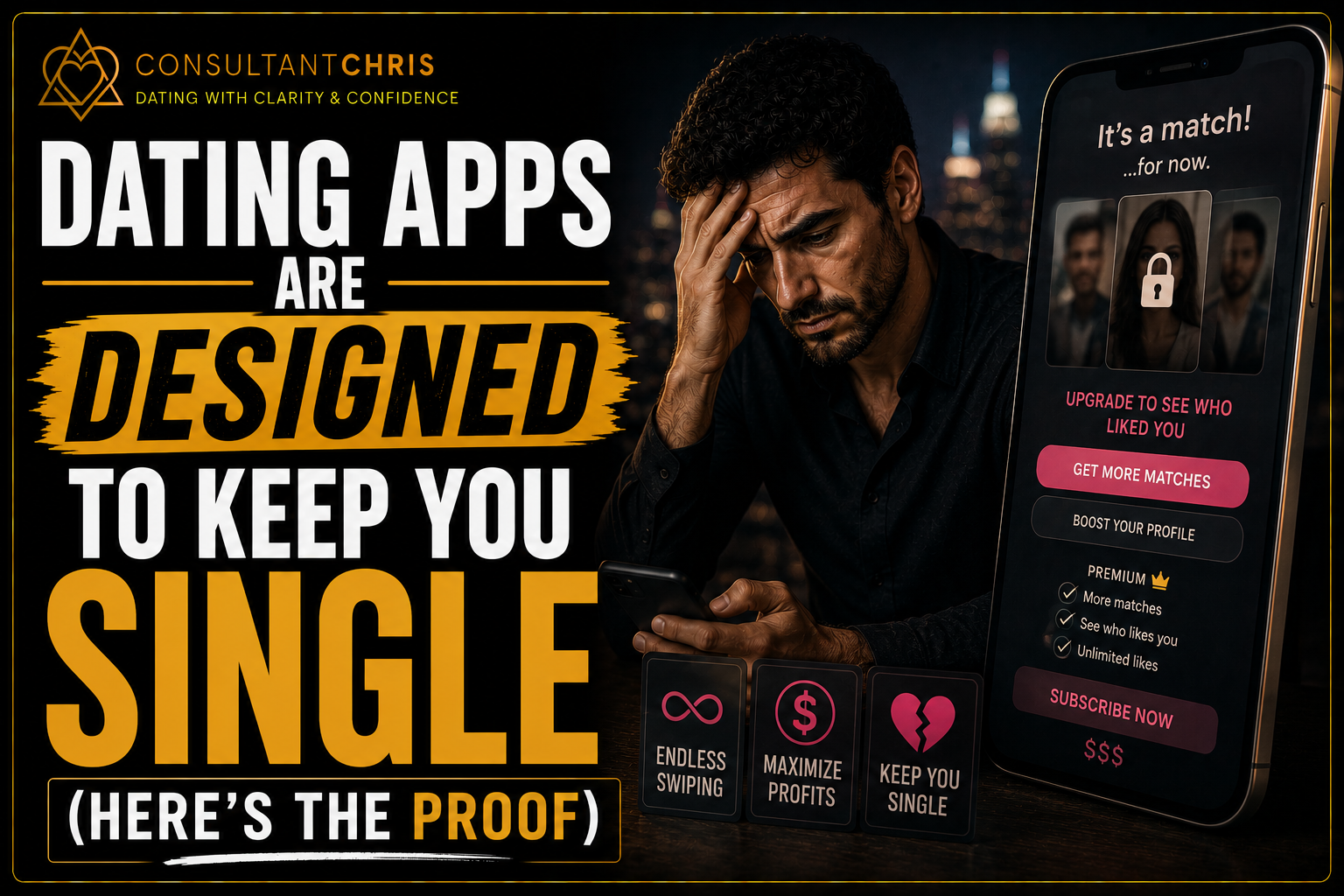
I want to say something that the dating app industry would very much prefer I didn’t say.
They are not trying to find you a partner. They are trying to keep you on the platform.
Those are not the same goal. In fact, in several important ways, they’re opposite goals. And once you understand the business model underneath these apps, a lot of what you’ve experienced on them the endless swiping, the matches that go nowhere, the conversations that die after two messages starts to make a lot more sense.
This isn’t a conspiracy theory. It’s basic business logic. And understanding it might be the most useful thing you read about dating apps this year.
How Dating Apps Actually Make Money

Dating apps make money from subscriptions and from advertising revenue driven by engagement time. The longer you spend on the app, the more money they make. Not the faster you find a great partner the longer you stay active on the platform.
This creates a structural conflict of interest that most users never stop to think about. An algorithm genuinely optimized to find you a compatible long-term partner as quickly as possible would be an algorithm that destroys its own user base. You’d leave. You’d tell your friends. They’d leave. The app would collapse.
So instead, the apps are optimized for what product designers call ‘engagement.’ They want you to feel just enough hope to keep swiping, but not so much success that you stop needing them.
The Specific Mechanics of How They Keep You Stuck

Variable Reward Loops
This is the same psychological mechanism used by slot machines. Occasional, unpredictable rewards a match with someone attractive, a conversation that seems promising create a dopamine loop that keeps you coming back. The key word is occasional. If you matched with your ideal person on your first day on the app, you’d delete it immediately. The algorithm doesn’t want that.
Impression Management Over Genuine Connection
The entire interface of a dating app is built around optimizing your profile as a product rather than presenting yourself as a person. You’re selecting your best photos, writing a bio that performs well, reducing yourself to a swipeable unit. And you’re evaluating other people the same way. This optimizes for initial visual appeal and almost nothing else which is exactly backwards from how meaningful connection actually develops.
The Paradox of Choice
Research consistently shows that an abundance of options doesn’t make people happier it makes them more anxious and less decisive. When you know there are thousands of potential matches in your area, you’re always wondering if there’s a better option two swipes away. This keeps you in evaluation mode rather than connection mode. It’s structurally designed to prevent you from fully investing in any single person.
Ghost-Friendly Design
Dating apps make it extremely easy to disappear on someone. No social accountability. No mutual friends. No awkward run-ins. This depresses the emotional cost of poor behavior, which means the overall quality of interactions on the platform is lower more ghosting, less effort, shallower engagement. You’re navigating a marketplace with very low relationship-quality norms, and that drags everyone’s experience down.
Why Smart Men Are Especially Disadvantaged on Apps
Here’s something I’ve noticed working with professional men: the qualities that make them genuinely attractive in person are largely invisible on a dating app profile.
Emotional intelligence doesn’t show up in photos. The depth of a real conversation doesn’t come through in a two-message exchange. The feeling of ease and safety that an emotionally grounded man creates for a woman that experience simply cannot be transmitted through a screen-based, profile-filtered, algorithmically mediated interface.
Meanwhile, the qualities the apps favor physical symmetry, the ability to craft a witty bio, sheer volume of swipes often have almost nothing to do with what makes someone a good partner or an attractive presence in real life.
The result is that apps systematically undervalue exactly the men who would be most compelling in person. If you’ve been wondering why your results on apps don’t reflect how you actually come across in the real world this is a significant part of why.
What This Means for Your Strategy

I’m not saying never use apps. Used deliberately and with realistic expectations, they can be one component of a broader approach. But treating them as your primary or only strategy for meeting women is a choice that the app companies would love for you to keep making and that is probably not serving you as well as you think.
The men I work with who make the most consistent progress are the ones who invest in getting good in real-world contexts. Building the ability to start a genuine conversation at an event, at a coffee shop, in a social circle. Developing the emotional presence to make a strong impression quickly. Getting good at moving from an initial interaction to something real.
These skills compound. They work regardless of platform. And they produce a quality of connection that no dating app has ever been able to replicate because they’re built on actual human presence rather than profile optimization.
The Broader Point
The dating advice industry, like the app industry, profits from your continued confusion. The more frustrated you are, the more products you buy. I say this as someone in this industry, and I think it’s important to be honest about it.
What I offer my clients isn’t a magic formula or a set of secret techniques. It’s a real skill set emotional intelligence applied to dating that produces genuine results because it addresses the actual problem instead of creating dependence on a platform that benefits from your continued struggle.
The app has an algorithm. You have a brain, a personality, and the capacity for real emotional connection. Those are better assets. Learn to use them.
The incentives behind these apps rarely line up with what users actually want. Why women are done with them backs this up from the other side, and real life versus apps breaks down what actually works instead.
