


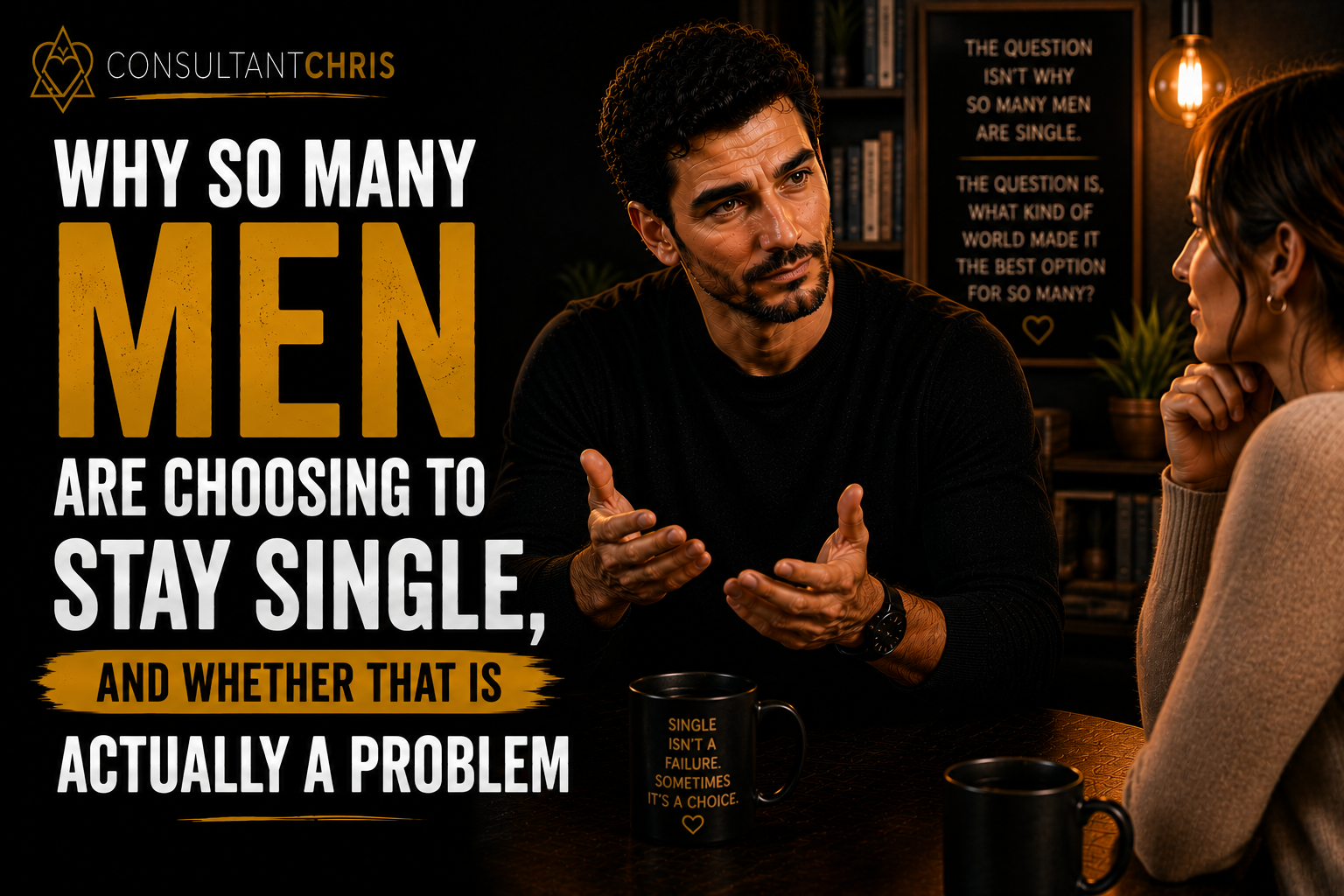
There is a growing trend in the data and in the discourse that deserves honest engagement rather than either celebration or alarm.
More men are choosing to remain single not because they are failing to attract partners, but as a deliberate choice. Some are citing the complexity and perceived risk of modern relationships. Some are citing the legal and financial exposure of marriage in a divorce-heavy landscape. Some are citing a preference for freedom and self-direction that they feel partnerships compromise. And some though this is the version that gets the least airtime are opting out because they have been hurt enough times that the prospect of genuine emotional investment feels too risky to attempt again.
I want to engage with all of these honestly, because there is real variation in what is driving this trend and the appropriate response to each version is different.
The Version That Is Legitimate

There is a genuine version of choosing single life that is a healthy, considered expression of what a particular person actually wants from their life. Some men genuinely thrive with the independence, the self-direction, the absence of the compromises that cohabitation and partnership require. They have rich friendships, meaningful work, genuine connection in their lives just not a romantic partnership as the central organising relationship.
That is a legitimate choice, and it deserves to be treated as one rather than pathologised. Not everyone is wired for long-term romantic partnership in the conventional sense, and pretending otherwise does those men a disservice.
The Version That Is Avoidance

There is also a version of choosing single life that is avoidance dressed in the language of preference. The man who tells himself he prefers freedom but spends his weekends alone wishing he had someone to spend them with. The man who cites feminist jurisprudence as his reason for not dating but has never actually had a relationship that got close to the legal questions he is worried about. The man who says he has not found anyone worth his time but has not genuinely tried in three years.
The tell is the gap between the stated preference and the experienced reality. If single life genuinely feels right if it produces the contentment and fullness that a good life should then it probably is right for now or permanently. If single life produces chronic low-grade loneliness that gets covered by work, screens, and the language of conscious choice, then the framing is protecting something that deserves to be examined.
No framing is more dangerous than the one that converts avoidance into identity. The man who tells himself he prefers being alone for long enough starts to believe it and the genuine desire for connection, the one underneath the protective narrative, goes unaddressed.
The Honest Questions Worth Asking

If you are currently choosing single life, or considering it, these are the questions worth sitting with honestly.
Does my single life feel genuinely full or does it feel like the absence of something I have stopped trying to find? Am I choosing this because it suits who I am, or because the prospect of being genuinely vulnerable in a relationship feels too risky? If a genuinely compatible, emotionally intelligent woman showed up in my life tomorrow, would I be glad or would I find a reason it would not work?
The answers to those questions are more useful than any framework about what men should or should not want. Your life is yours. The goal is to be honest about what you actually want from it rather than constructing the most defensible story about the choice you have made by default.
Choosing to stay single is not always avoidance, but sometimes it is. The male loneliness epidemic is worth reading alongside this, and so is wasting your prime dating years waiting to be ready.
