



One good first date happens, and suddenly there’s a running text conversation: good morning messages, updates throughout the day about what you’re up to, a steady stream of contact that, from your side, feels like closeness building naturally and organically between two people who are genuinely excited about each other. From the outside, on the receiving end, it can read very differently, less like closeness and more like pressure disguised as interest, a volume of contact that starts to feel like an obligation to keep up with rather than something genuinely enjoyable.

Here’s the distinction that matters most, and it’s one most guys don’t make clearly enough in their own head before it’s already a problem. Volume of texting is not the same thing as genuine connection through texting. A woman who’s authentically interested in someone usually does want some texting between dates, that’s normal and healthy. But there’s a real, meaningful difference between a few genuinely meaningful exchanges, a funny observation shared, a quick check-in, a thoughtful question, and a constant, near-continuous stream of contact that starts to feel less like connection and more like a low-grade obligation she now has to manage on top of everything else in her day.
I want to walk through what this actually looks like from both sides, because the intent behind it is almost always innocent, even sweet, and that’s exactly what makes it hard to self-diagnose. From the guy’s side, each individual message feels small and reasonable in isolation: a good morning text, a quick ‘thought of you when I saw this,’ a message asking how her day is going. None of these feel excessive on their own. It’s the cumulative volume, several messages a day, every day, that starts to shift the dynamic, regardless of how reasonable each individual message seemed at the time it was sent.
The instinct to over-text after a good date often comes from a specific place, and it’s worth naming honestly rather than just labeling the behavior as needy or clingy, which doesn’t actually help anyone change it. Over-texting is frequently driven by anxiety, specifically the anxiety of not knowing where things stand and wanting reassurance that things are still good, rather than actually wanting to genuinely share something meaningful with her in that particular message. The message becomes less about connection and more about self-soothing, checking whether she still likes you by seeing whether she responds, and how quickly.
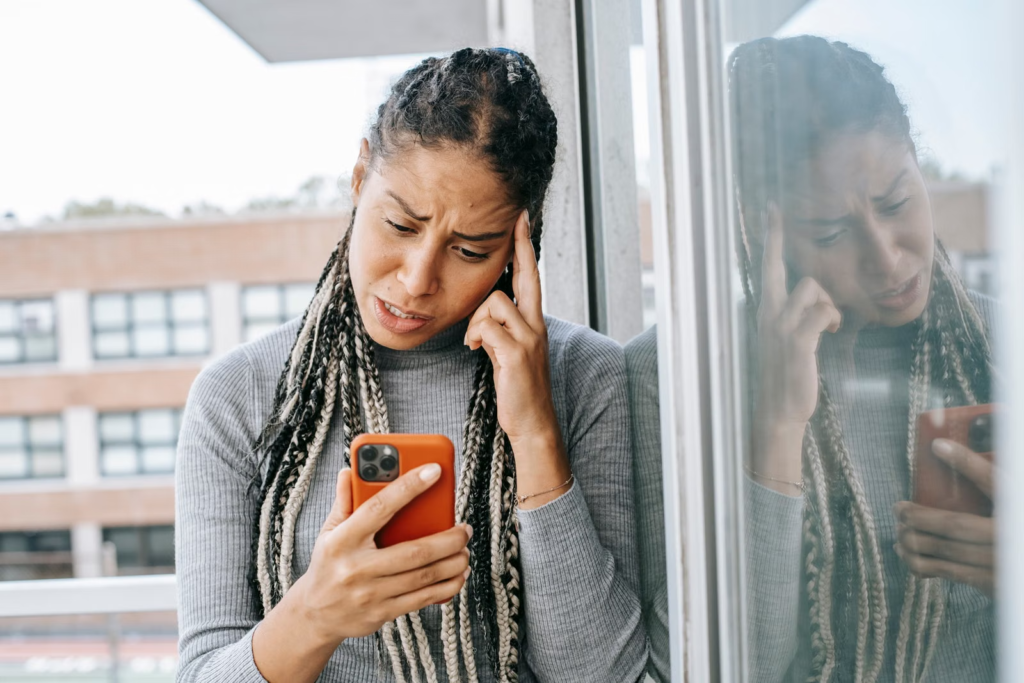
This distinction matters because it points directly to the actual fix, which isn’t a rule about text frequency, it’s addressing the underlying anxiety directly. If you notice yourself reaching for your phone to text her not because something genuinely worth sharing just happened, but because you’re feeling uncertain and want reassurance, that’s worth catching in the moment. The uncertainty itself is normal and doesn’t need to be eliminated. What needs to change is how you respond to it. Reaching for reassurance through her response, over and over, creates exactly the dynamic that tends to push people away rather than draw them closer.
There’s a useful practical guideline here, even though it’s not a hard rule. Before sending a text between dates, it’s worth briefly asking yourself whether this message exists because you genuinely want to share something with her, or because you want to check whether she’s still interested. Messages from the first category tend to land well and build real connection. Messages from the second category, even when they’re worded identically, tend to accumulate into the pattern that starts to feel like pressure over time, because the underlying need behind them is different, and people pick up on that underlying need even when the surface content seems fine.
This is self-regulation applied specifically to the anxiety of ambiguity, tolerating the genuine uncertainty of not knowing exactly where things stand between dates, instead of trying to text your way out of that discomfort by seeking constant, low-level reassurance. It’s one of the more common patterns I work through in coaching, specifically with guys who are otherwise emotionally intelligent and thoughtful in most other areas of their lives, because the anxiety here is genuinely uncomfortable, and texting provides an immediate, if temporary, relief from it.

It’s worth naming a related pattern that shows up alongside over-texting: over-analyzing her responses, reading extended meaning into response time, message length, or punctuation choices. This kind of analysis usually comes from the same underlying anxiety driving the over-texting itself, and it tends to feed the cycle rather than resolve it, because every perceived slight in her response style becomes fresh fuel for another anxious message trying to clarify or check in again.
A useful practical habit, if this pattern feels familiar, is setting a personal rule for yourself around response timing, not to seem strategically aloof, but genuinely to interrupt the reflexive urge to respond the instant a message comes in. Waiting even twenty or thirty minutes before replying, when there’s no real urgency, gives the anxious impulse time to settle before it drives the next message, and it usually results in a more grounded, genuine reply anyway, rather than one written from a place of immediate reactive need.
It’s worth remembering, too, that pacing correctly between dates doesn’t mean being cold or withholding. It means matching genuine content and reciprocity rather than raw volume, which usually results in fewer, better texts rather than a strict, anxious counting exercise.
It helps to remember that a woman who is genuinely into you will rarely disappear over a slightly slower reply. If anything, a little space tends to build anticipation rather than erode interest, which is the opposite of what the anxious version of yourself usually predicts in the moment.
Texting all day between dates feels like you’re building a connection, but usually it just wears it out. When you’ve already talked about everything by text, there’s nothing left to discover in person, and the gap between dates starts to feel like a pen-pal thing. It’s one of the texting mistakes that are killing your chances. Use texts to stay in touch and make plans, then save the real conversation for when you’re together, because texting isn’t the skill you think it is. If you notice you’re always the one sending the next message, that may be a sign you like her more than she likes you.
If this pattern feels familiar, and it’s a genuinely common one, more common than most guys realize because it doesn’t get talked about as openly as some other dating mistakes, it’s completely fixable with the right awareness and practice. And when you’ve built better pacing and a genuine tolerance for the natural uncertainty of early dating, my matchmaking partner LEVEL Connections can put you in front of someone genuinely worth taking your time with, rather than someone you need to constantly check in on to feel secure about.
